
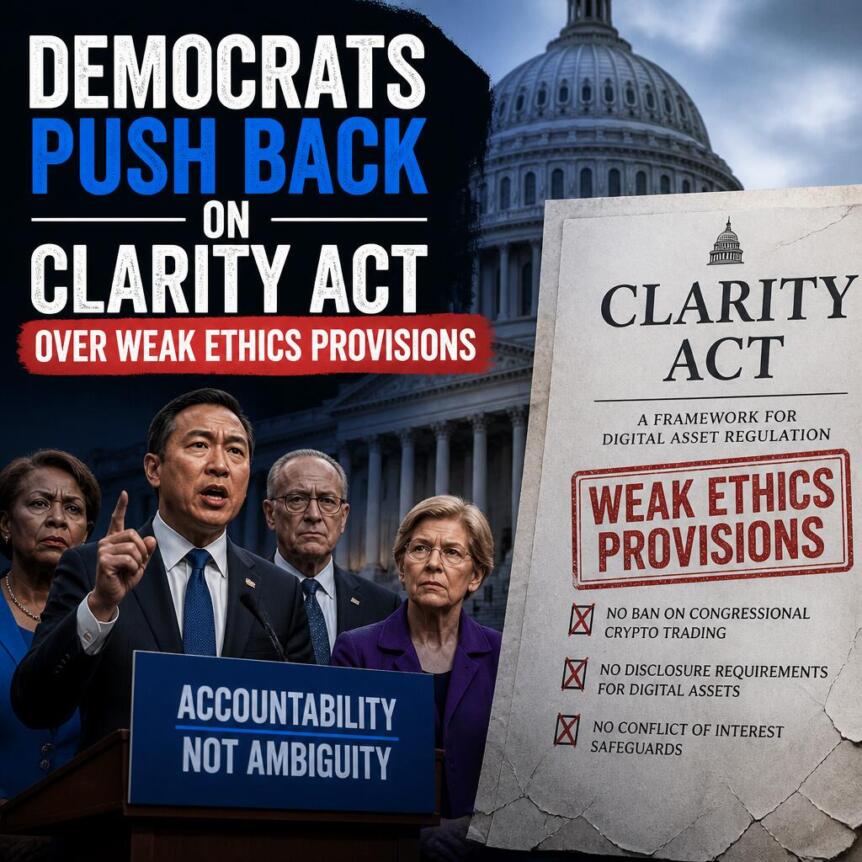
Democratic lawmakers are pushing back against the latest draft of the CLARITY Act over its ethics provisions. The lawmakers believe the provisions do not adequately address President Trump’s crypto interests.
Lawmakers have signalled support for the legislation if stronger provisions are included. However, the bill has found support in the crypto industry, with Coinbase and Ripple backing it.
Democratic Lawmakers Push Back Against Clarity Act Draft
Republican lawmakers released the latest draft of the CLARITY Act on Wednesday (July 22), with several prominent figures from the crypto industry supporting the measure. However, the legislation quickly faced fierce pushback from Democratic lawmakers over weak ethics provisions. The lawmakers argued that the provisions were inadequate to address President Trump’s crypto links. Senator Angela Alsobrooks said the current draft fell short and asked for key provisions to be strengthened, stating, “The Republican-proposed text of the CLARITY Act as it currently stands falls short. Key provisions including those addressing ethics for elected officials, consumer protection, illicit finance, conflicts of interest and market integrity must be strengthened.”
President Trump and his family remain involved in the crypto industry, with interests including a popular memecoin and World Liberty Financial, a decentralized protocol that operates a borrowing-and-lending platform. According to financial disclosures, President Trump received millions tied to WLF.
Incomplete Enforcement Mechanism
The 616-page draft prohibits public officials and their spouses from sponsoring and issuing digital assets. However, it does not prohibit extended family members. The draft also includes a clause stating the restrictions expire in January 2029 and tasks the Justice Department with enforcing the provisions. Senator Ruben Gallego supported the bill in the committee but has ruled out backing it in the Senate unless the ethics language is changed. Besides Alsobrooks and Gallego, Senate Democrats Catherine Cortez Masto and Cory Booker have also opposed the bill in its current form.
Senator Elizabeth Warren took to X, criticizing the bill and stating, “The new draft of the Senate GOP crypto bill does nothing to stop President Trump from making his next $1.4 billion from crypto. It’ll supercharge Trump’s crypto corruption. This bill should be dead on arrival.”
Amanda Fischer, Chief Operating Officer and policy director for Better Markets and former chief of staff for Gary Gensler, believes the draft does not change much for President Trump and his entanglement with crypto.
“The bottom line: Doesn't change much at all about Trump's existing crypto grift. No divestment required. Maybe stops new crypto grifts, but it's up to his personal attorney Todd Blanche to enforce. Amnesty kicks in as soon as the new POTUS is inaugurated.”
Support From The Crypto Industry
Unsurprisingly, prominent individuals from the crypto industry threw their weight behind the legislation. Supporters were happy the bill retained software developer protections and added that the legislation would ensure regulatory clarity and elevate the US’ role in the digital asset industry. Ji Hun Kim, CEO of the Crypto Council for Innovation, urged for bipartisan support to get the bill across the line, and Solana Policy Institute CEO Miller Whitehouse-Levine called on Congress to “seize the moment.”
The strongest support for the bill came from Coinbase and Ripple. Coinbase CEO Brian Armstrong said the lack of a clear regulatory framework had hurt the industry, allowing major incidents like the FTX collapse to hurt consumers. Stuart Alderoty, Chief Legal Officer at Ripple, said the bill gives law enforcement agencies the teeth to go after bad actors, while CEO Brad Garlinghouse stated the bill does not have to be perfect to pass.
Supporters of the legislation are urging Congress to vote on the bill before its August recess. However, this depends on whether Democrats and Republicans can agree to a timely compromise.
Disclaimer: This article is provided for informational purposes only. It is not offered or intended to be used as legal, tax, investment, financial, or other advice.
https://www.cryptobreaking.com/democrats-push-back-on-clarity/?utm_source=blogger%20&utm_medium=social_auto&utm_campaign=Democrats%20Push%20Back%20On%20Clarity%20Act%20Over%20Weak%20Ethics%20Provisions%20
Comments
Post a Comment