
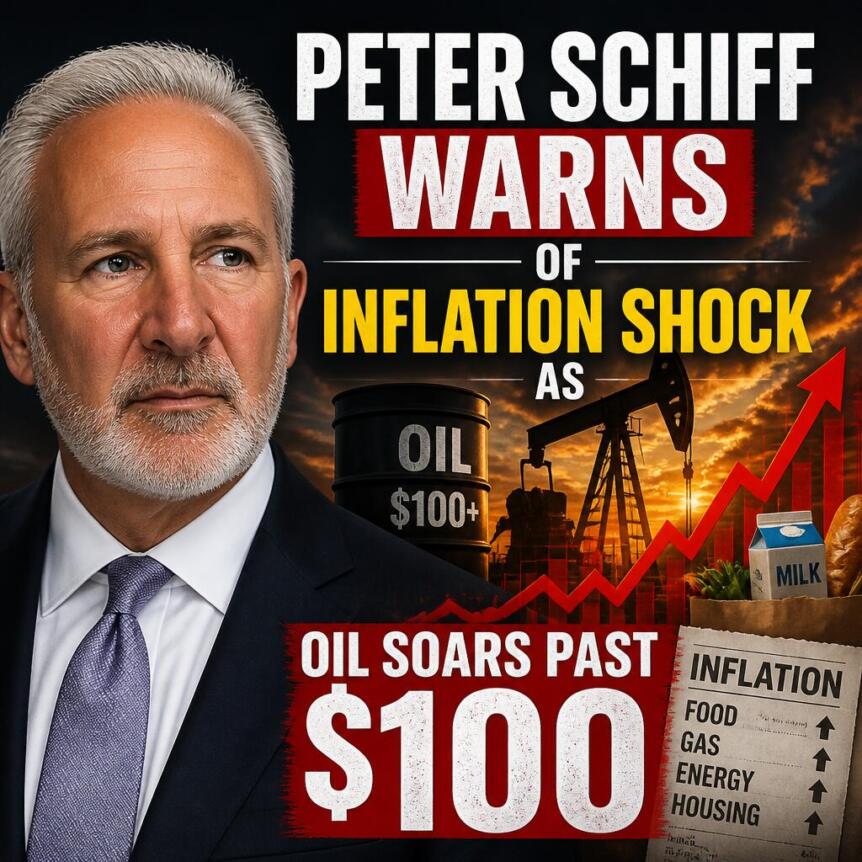
Leading economist Peter Schiff has warned that rising oil prices could drive July CPI numbers higher after a drop in the June CPI, which was largely due to oil declining by 30%.
Oil prices have risen sharply after renewed US-Iran hostilities, Houthi attacks on Saudi-linked tankers, and fresh oil supply concerns.
Peter Schiff Flags Inflation Concerns Ahead Of Fed Meeting
Schiff’s warning comes amid renewed US-Iran tensions and supply chain concerns after Iran imposed a blockade on the Strait of Hormuz and the Bab el-Mandeb Strait. The economist noted that June CPI numbers were lower due to a substantial drop in crude prices. However, the recent increase in prices could undermine June’s progress and drive inflation higher in July.
Schiff stated in a post on X,
“Investors celebrated the June CPI, as a 30% fall in the price of oil led to a larger-than-expected decline. But so far in July, the price of oil is already up 30%, back above $90 per barrel.”
Schiff said that if prices went back above $100, it would mark a 43% increase from recent lows, and would adversely impact July CPI numbers. Brent crossed the $100 mark hours after the warning of Houthi-led attacks on Saudi oil tankers.
“If the price hits $100 by month-end, that will be a 43% rise. July CPI could be a doozy.”
Schiff argued that June’s lower CPI numbers were due to lower oil prices, and higher prices in July could completely reverse progress and drive inflation higher.
“No, it’s just that the only reason June CPI fell so much was the 30% drop in oil. That will likely be completely reversed by an even bigger rise in the price of oil in July.”
Oil Prices Could Push July Inflation Numbers Higher
US Bureau of Labor Statistics data showed a 0.4% decline in headline CPI, as against the expected 0.1% decline. Meanwhile, annual inflation fell from 4.2% to 3.5%, below the expected 3.8%. The decline was primarily attributed to declining energy prices.
US Bureau of Labor Statistics data show the energy index declined 5.7% in June, its largest decline since April 2020, when gasoline prices fell by nearly 10%. Meanwhile, Core CPI remained unchanged, but was 2.6% higher than last year.
However, energy prices are 15.7% higher than last year, while gasoline prices are up 26.7% over the same period. This could push household expenses even higher if oil prices remain high for the rest of the month.
Renewed Geopolitical Headwinds
Oil prices have spiked after another flare-up in the Middle East following an attack on Saudi oil tankers. Iran has also blockaded the Bab el-Mandeb Strait through the Houthis, a route Saudi exporters rely heavily on since the restrictions in the Strait of Hormuz. Reuters has reported a drastic decline in Iranian oil exports, which fell from 2 million barrels per day to nearly zero during the ongoing conflict. Goldman Sachs analysts also issued a dire warning, telling Reuters Brent could cross $120 if the ongoing disruptions continue.
Diplomatic efforts have also stalled, with US Secretary of State Marco Rubio accusing Iran of being unwilling to negotiate while maintaining Washington remained committed to negotiations. US and Iranian military activity also increases the risk of damaging crucial oil infrastructure.
Fed Meeting Takes Center Stage
Focus now shifts to the Federal Open Market Committee (FOMC) meeting, scheduled for July 28 and 29. Rising oil prices could influence the Federal Reserve’s decision on interest rates. Policymakers believe one report is not sufficient to establish a downward trend.
Governor Chris Waller had said after the June report that the Fed needed to see several months of softer data before it could establish that inflation was moving towards its 2% target. Analysts expect the Fed to maintain its target range at 3.50%-3.75%.
Disclaimer: This article is provided for informational purposes only. It is not offered or intended to be used as legal, tax, investment, financial, or other advice.
https://www.cryptobreaking.com/peter-schiff-warns-of-inflation/?utm_source=blogger%20&utm_medium=social_auto&utm_campaign=Peter%20Schiff%20Warns%20Of%20Inflation%20Shock%20As%20Oil%20Soars%20Past%20$100%20
Comments
Post a Comment