
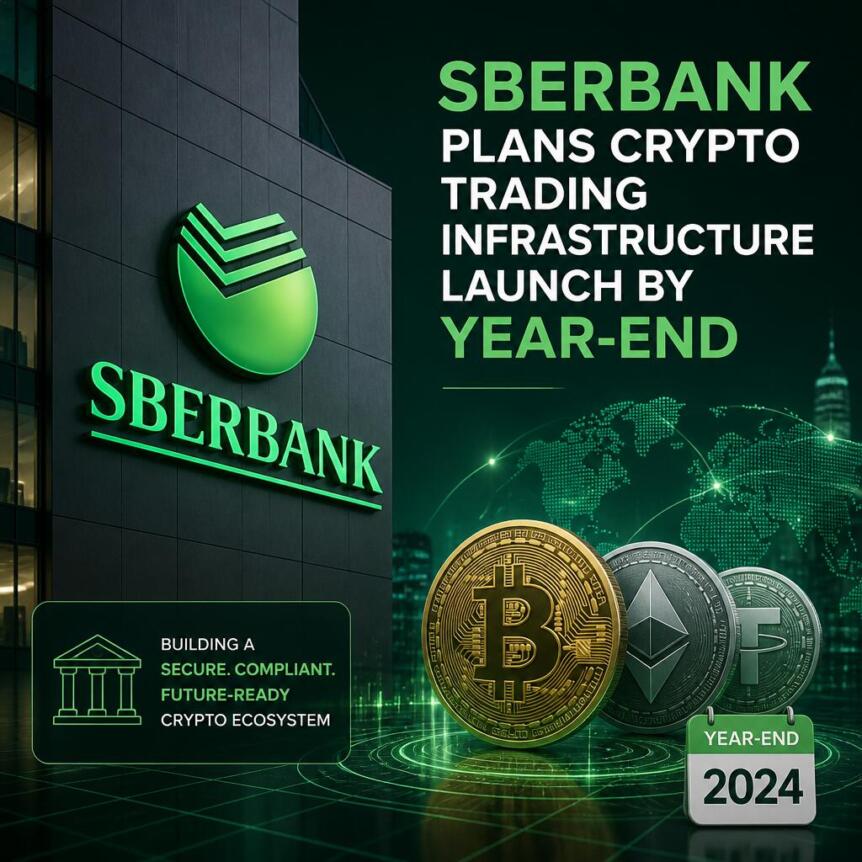
Sberbank, Russia’s largest bank, plans to roll out crypto trading infrastructure by December 2026. The announcement comes ahead of new regulations for crypto trading, custody, and settlement that come into force from September 1, 2026.
Russia’s crypto push comes as the European Union readies new sanctions targeting the country over the ongoing Ukraine conflict.
Sberbank Plans Crypto Infrastructure Rollout
Sberbank plans to build and launch critical crypto trading infrastructure, including a digital depository, by December 1, 2026. The bank is leading Moscow’s efforts to bring cryptocurrency trading, custody, and settlement into the mainstream financial system. Sberbank’s announcement comes after Russia approved new rules for cryptocurrency exchanges, brokers, banks, and digital depositories. The new regulations come into force on September 1, 2026. Companies will also be given additional time to ensure compliance with the new requirements.
“Russia’s Largest Bank Sberbank Plans Crypto Trading Infrastructure: Sberbank, Russia’s largest bank, plans to build cryptocurrency trading infrastructure and launch a digital custody system by Dec. 1 to support regulated crypto trading, custody and settlement.” - Wu Blockchain
The digital depository will record cryptocurrency ownership and process transactions outside the primary blockchain. Sberbank will also operate wallets for client deposits, withdrawals, and transfers. Alexander Vedyakhin, first deputy chairman of Sberbank’s management board, stated,
“One of the key elements of the new infrastructure will be a digital depository, which will maintain records of clients’ cryptocurrency rights and account for transactions outside the main blockchain. It will also facilitate transactions on active wallets to fulfill clients’ currency transfer orders.”
However, the bank is yet to disclose eligibility, fees, withdrawal limits, or which cryptocurrencies are supported by the framework.
Sberbank Expanding Crypto Services
Sberbank joined Russia’s register of information system operators in 2022, and has since issued several digital financial assets and products linked to Bitcoin (BTC), Ethereum (ETH), and other assets. As mentioned earlier, the bank was already working on a digital asset depository and cryptocurrency wallet. It could also give customers access to foreign cryptocurrency exchanges depending on prevailing regulatory requirements. Sberbank has also dabbled in cryptocurrency-backed lending, completing a pilot loan with Bitcoin miner Intellion Data. According to reports, the bank has considered offering similar loans to corporate customers.
Russia’s Crypto Market Framework
Russian lawmakers concluded a final reading on a bill to regulate cryptocurrencies in the country. The bill gives the Bank of Russia oversight of the cryptocurrency market, including the authority to dictate which cryptocurrencies are offered through licensed intermediaries. The bill categorizes market participants, dictating which entities can buy, sell, hold, and exchange crypto assets once the framework comes into effect. The Bank of Russia has set an average market capitalization of over 5 trillion rubles (~$64 billion) and an average 24-hour volume of 1 trillion rubles (~$12.8 billion) over two years for cryptocurrencies offered under the framework.
Moscow’s push for a regulated crypto framework comes as the EU imposed another tranche of sanctions and also listed the HTX cryptocurrency exchange in the sanctions for “providing crypto asset services or payment services established outside of the Union that are significantly frustrating the purpose of the prohibitions against Russia.”
EU officials have also barred Belarusian nationals and residents from owning, controlling, or managing cryptocurrency exchanges in compliance with the Markets in Crypto Assets (MiCA) framework.
According to the Bank of Russia, the new framework allows investors to purchase crypto assets through regulated intermediaries. However, qualified and non-qualified investors are subject to different limits. Both qualified and non-qualified investors must pass a test to become eligible to purchase crypto assets. However, qualified investors can access more cryptocurrencies and are not subject to an annual limit when investing. On the other hand, non-qualified investors can access limited digital assets and can only purchase 300,000 rubles worth of crypto per year through a single intermediary.
Russian Companies Prepare For New Framework
Other entities are also preparing for the new framework. VTB and T-Bank are developing their own digital depository services, while the Moscow Exchange is considering offering regulated crypto operations. Alfa Bank has also tested custody tools and cryptocurrency services, a clear indicator that major players in Russia’s financial sector are preparing themselves before the licensing deadline.
Disclaimer: This article is provided for informational purposes only. It is not offered or intended to be used as legal, tax, investment, financial, or other advice.
https://www.cryptobreaking.com/sberbank-plans-crypto-trading-infrastructure/?utm_source=blogger%20&utm_medium=social_auto&utm_campaign=Sberbank%20Plans%20Crypto%20Trading%20Infrastructure%20Launch%20By%20Year-End%20
Comments
Post a Comment