
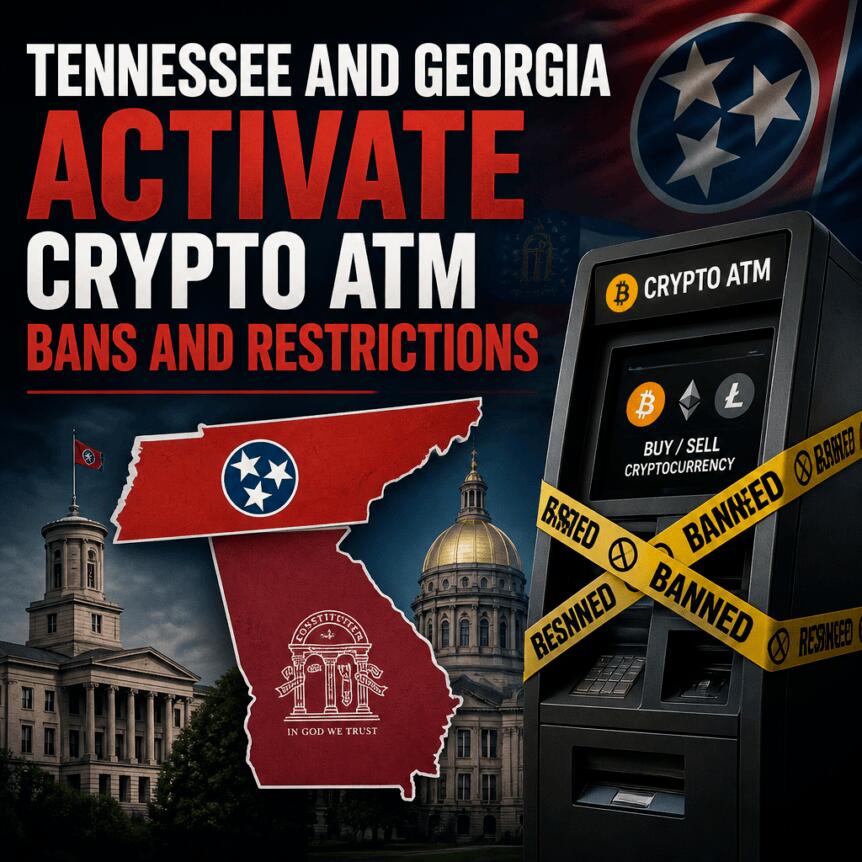
Crypto ATM availability is shrinking in the United States as new state laws designed to curb fraud and tighten consumer protections move into force. Tennessee and Georgia are the latest states to impose restrictions effective this week, following earlier actions in Indiana and upcoming enforcement in Minnesota.
The changes reflect a broader pattern: regulators and lawmakers across the US are targeting kiosks after scammers used them—often to trick vulnerable residents—into sending funds. For operators, the result is a more complex compliance landscape and, in some cases, an unsustainable business model.
Key takeaways
- Tennessee has implemented a statewide ban that prohibits the use and installation of crypto ATMs and kiosks.
- Georgia allows crypto ATMs to operate but introduces transaction caps, customer warnings, and reporting requirements, with provisions that can include refunds in certain fraud cases.
- Earlier state bans include Indiana (effective in March), while Minnesota is set to enforce a ban on Aug. 1.
- Regulatory pressure is already showing up financially, with Bitcoin Depot filing for Chapter 11 bankruptcy after signaling “substantial doubts” about its future.
Tennessee and Georgia tighten rules on crypto kiosks
Georgia and Tennessee each passed crypto ATM legislation that takes effect on Wednesday, but the approaches differ sharply. Tennessee’s law—signed by Governor Bill Lee in April—implements a complete prohibition on both installing and using cryptocurrency ATMs and kiosks.
Georgia’s law is more permissive while still aiming to reduce consumer harm. It requires operators to limit the amount of money sent by users, issue warnings to customers, and in some scenarios refund people who may have been defrauded.
Before Tennessee’s statewide ban took effect on July 1, CoinATMRadar data cited by CoinATMRadar’s Tennessee listing indicates there were 185 crypto ATMs and kiosks operating in the state.
Why lawmakers are moving from “local bans” to statewide action
The Tennessee and Georgia measures follow a wave of earlier regulatory efforts aimed at crypto ATM operators. Cointelegraph previously reported that multiple jurisdictions and municipalities have begun cracking down on kiosks, largely in response to scams in which victims—particularly older adults—were persuaded to send cryptocurrency through ATM-style machines.
Delaware and New Jersey, for example, have considered proposals that would impose complete bans, according to earlier coverage referenced in the original reporting. The direction of travel is consistent: lawmakers increasingly view crypto ATMs as high-risk access points for fraud rather than neutral on-ramps.
As these restrictions expand, operators face more than just reduced machine counts. Compliance obligations—such as monitoring transactions, handling fraud-related disputes, and meeting consumer protection requirements—can increase costs while limiting revenue options.
Regulation’s downstream effects: bankruptcy risk for operators
For the industry, the regulatory tightening is not only theoretical. The restrictions may have already contributed to at least one major operator’s distress.
In May, Bitcoin Depot filed for Chapter 11 bankruptcy. In the days leading up to the filing, the company disclosed that it had “substantial doubts” about its future amid a challenging regulatory environment and ongoing litigation.
Roshan Dharia, CEO of Echo Base and a restructuring adviser, told Cointelegraph after the Chapter 11 filing that Bitcoin Depot’s bankruptcy likely foreshadows broader pressure on the crypto ATM sector. Dharia argued that the traditional operator model relied on relatively high transaction spreads and fewer regulatory constraints, which helped offset the high costs of compliance, cash logistics, fraud remediation, and retail revenue-sharing arrangements.
That equation, Dharia said, is breaking down as states increasingly impose consumer-protection standards. Those standards can compress fees while increasing operator liability for scam-related activity and raising expectations for transaction monitoring and reimbursement—factors that can strain business viability, especially for operators with thinner margins.
Canada signals a wider policy debate
While the latest developments are focused on US states, Canada’s regulatory conversation is also moving toward harsher restrictions. Earlier, federal policymakers in Canada proposed a total ban on crypto ATMs across the country.
The proposal would still allow Canadians to buy digital assets from brick-and-mortar money services businesses, but it would remove the kiosk pathway. Officials described crypto ATMs as the “primary method” used by scammers to defraud victims and as a channel for criminals to put cash proceeds of crime into the digital asset ecosystem.
What to watch next
With Tennessee now operating under a full ban and Georgia enforcing limits and reporting, attention will likely shift to how quickly other states follow suit—particularly Minnesota ahead of its Aug. 1 deadline—and whether operators adjust by exiting certain markets or restructuring their compliance and fraud-handling processes.
https://www.cryptobreaking.com/tennessee-and-georgia-activate-crypto/?utm_source=blogger%20&utm_medium=social_auto&utm_campaign=Tennessee%20and%20Georgia%20Activate%20Crypto%20ATM%20Bans%20and%20Restrictions%20
Comments
Post a Comment