
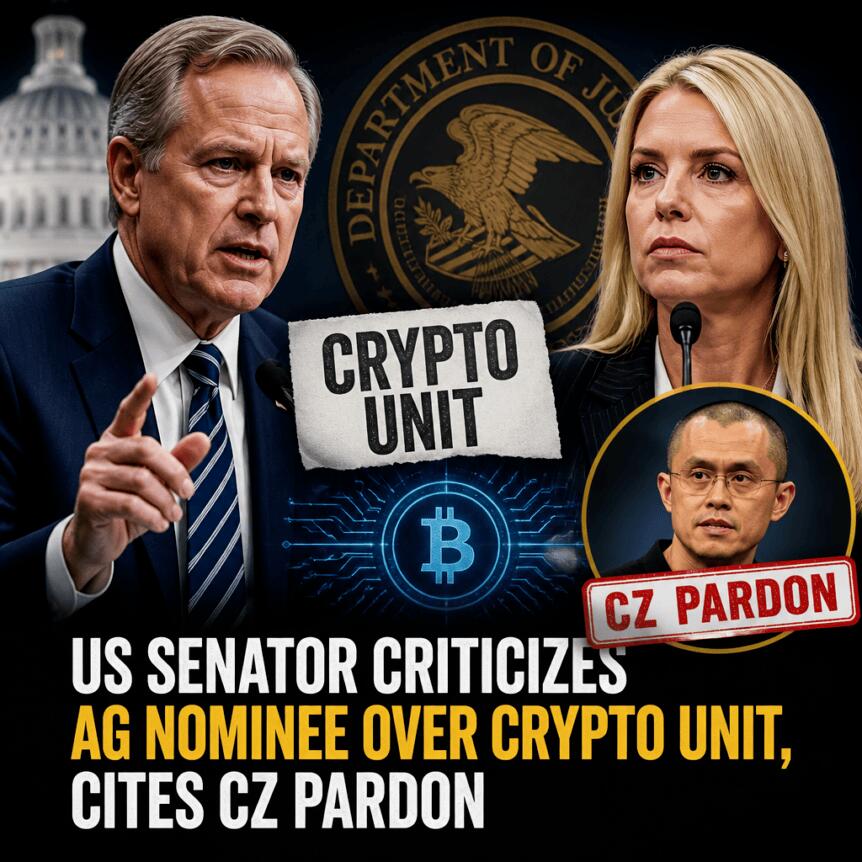
Acting U.S. Attorney General Todd Blanche faced sharp criticism at a Senate Judiciary Committee hearing on Wednesday as lawmakers weighed his nomination to lead the Justice Department. The backlash centered on how the department has pursued— or deprioritized—crypto-related enforcement, particularly in cases involving the broader developer ecosystem.
Senator Dick Durbin, the ranking Democrat on the committee, used portions of his opening statement to accuse Blanche of weakening DOJ’s crypto enforcement capacity. Durbin referenced Blanche’s reported role in dismantling a DOJ crypto enforcement unit in April 2025 while he was deputy attorney general, arguing that the move left ongoing investigations effectively “shut down” during the Trump administration’s push toward different enforcement priorities.
Key takeaways
- Durbin’s criticism ties Blanche’s prior DOJ actions to a broader shift in crypto enforcement, including alleged “dismantling” of the department’s crypto unit.
- Questions from Republicans—including concerns about Changpeng “CZ” Zhao’s presidential pardon—highlight ongoing political scrutiny of crypto outcomes.
- Blanche signaled a framework that aims to avoid charging developers who are not implicated in third-party wrongdoing.
- The committee vote math remains tight, with the confirmation process dependent on the Senate session’s practical majority rules.
Durbin’s attack on Blanche’s crypto enforcement record
At Wednesday’s hearing, Durbin argued that Blanche’s decisions as deputy attorney general enabled President Donald Trump to benefit financially from ties to the crypto industry. Durbin referenced reports that Blanche helped disband DOJ’s crypto enforcement unit in April 2025, citing Fortune’s reporting on the restructuring.
Durbin also alleged that Trump’s business interests, including family-linked World Liberty Financial, were connected to deals involving cryptocurrency. He further accused Binance’s former CEO Changpeng “CZ” Zhao of “broker a deal to channel $2 billion” into World Liberty—an accusation Durbin tied to Zhao’s later presidential pardon. The hearing remarks referenced Zhao’s 2023 agreement to plead guilty to a felony charge related to the exchange’s Anti-Money Laundering (AML) compliance.
Blanche’s nomination comes as the political stakes around DOJ leadership and enforcement priorities remain high. In addition to crypto policy, Republicans and Democrats are also disputing DOJ’s broader approach to issues such as immigration enforcement and how the department is handling sensitive political matters.
Confirmation dynamics: narrow path in the Senate
Blanche’s path depends on committee progress and then a Senate confirmation vote if his nomination advances. As of the hearing, the Senate Republican leadership, including Senator Mitch McConnell, faced an operational challenge: McConnell was still hospitalized after a fall described by his team as resulting in pneumonia. That uncertainty contributes to a slim margin in the Senate—described as 52-47 in favor of Republicans—meaning procedural details about attendance could become decisive for confirmation.
While Republicans hold the majority needed for a confirmation if a simple majority of lawmakers present supports the nominee, the nomination also faces targeted scrutiny. The hearing record suggests that lawmakers are not only debating the technical enforcement posture toward crypto, but also broader concerns about whether DOJ leadership will align with the administration’s political goals.
Blanche’s response: avoiding cases against “coders” not tied to wrongdoing
In addition to the political debate, Blanche addressed how DOJ intends to treat crypto software developers. According to a DOJ memo referenced at the hearing and later described in related coverage, the administration’s approach was framed as moving away from enforcement that “regulates by prosecution,” with the memo focused on shifting how the DOJ engages with the crypto sector. The memo was published by DOJ (see this DOJ document).
Blanche told crypto holders shortly after taking the acting role that officials would not pursue cases into blockchain developers who were not responsible for illicit activity on platforms. In remarks carried during industry coverage—specifically at the Bitcoin 2026 conference—Blanche indicated that DOJ would not investigate software developers when the developer is not a third-party user and is not knowingly helping someone commit crimes.
As quoted in the underlying reporting, Blanche described the distinction as follows: if someone is developing software or coding as part of the process, and is neither a user nor knowingly enabling third parties who commit crimes, then DOJ would not investigate or charge them. That is a notable signpost for developers and open-source contributors, because it suggests DOJ’s enforcement posture may be more carefully calibrated around scienter and direct involvement rather than broader theories that could sweep in peripheral actors.
What remains uncertain: ongoing prosecutions and “platform” cases
Even with Blanche’s emphasis on limiting charges against uninvolved coders, the department is not abandoning crypto enforcement altogether. The reporting around the hearing notes that DOJ still has ongoing cases against developers tied to platforms allegedly used for illegal activities. In other words, the line Blanche drew in public comments appears designed to narrow where DOJ looks for culpability, rather than eliminate enforcement.
Federal prosecutors are also expected to retry Tornado Cash co-founder Roman Storm later this year after a 2025 jury failed to reach a verdict on two charges. That procedural detail matters because it indicates that core enforcement actions connected to sanctioned or laundering-linked services are continuing through the courts, even as lawmakers debate whether the DOJ’s approach to developers is shifting.
For readers, the next watchpoint is whether Blanche’s confirmation will lead to measurable changes in charging decisions—especially how prosecutors apply intent and involvement standards to developers. The hearing made clear that political conflict and enforcement strategy will run in parallel, but the real test will be in the cases that move forward and those that get narrowed or dismissed.
https://www.cryptobreaking.com/us-senator-criticizes-ag-nominee/?utm_source=blogger%20&utm_medium=social_auto&utm_campaign=US%20Senator%20Criticizes%20AG%20Nominee%20Over%20Crypto%20Unit,%20Cites%20CZ%20Pardon%20
Comments
Post a Comment