
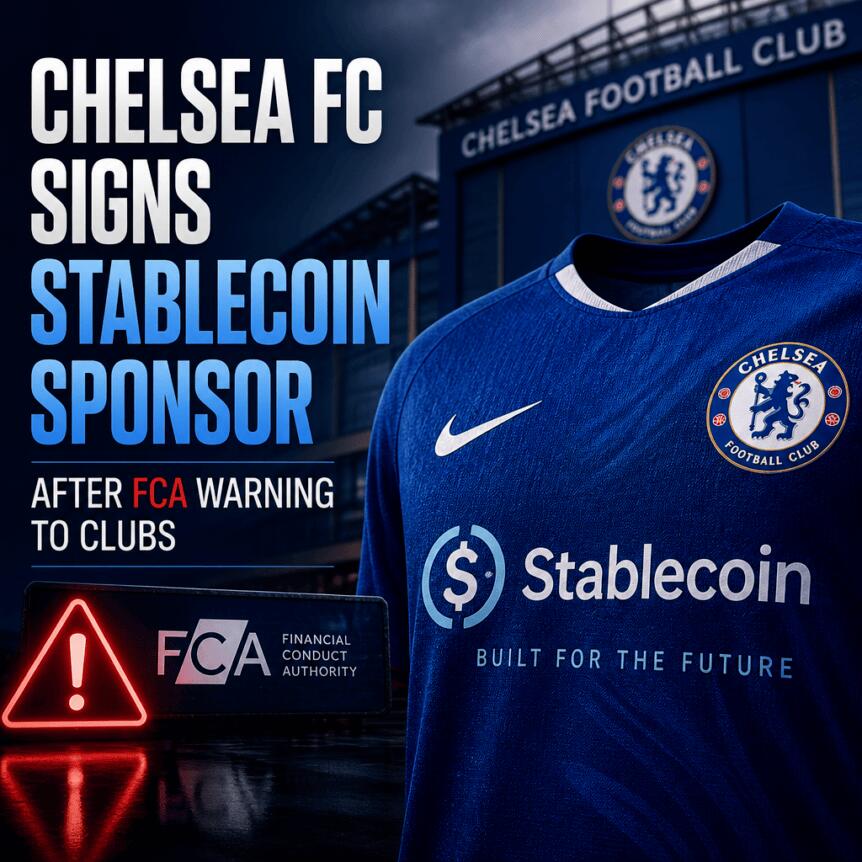
Circle, the issuer behind the USDC stablecoin, is set to become a sponsor of Chelsea Football Club, with its USDC branding appearing on player jerseys for the 2026/2027 season. The move arrives just months after the UK’s financial regulator warned Premier League clubs about sponsorship arrangements involving “unauthorized” financial firms, including some crypto-related businesses.
In a press release on Friday, Circle said it will bring the USDC name to the “global game” through a partnership with the London club. The announcement follows a period of heightened scrutiny in the UK over how digital asset companies market financial products to retail audiences—particularly through mainstream sports sponsorships.
Key takeaways
- Circle says USDC branding will feature on Chelsea FC jerseys in the 2026/2027 season.
- The sponsorship comes about three months after the UK FCA warned football clubs about deals with “unauthorized” financial firms.
- Regulators focused on whether such sponsorships could push potentially non-compliant products to millions of fans.
- Circle notes that USDC is issued by certain regulated affiliates, but it is not issued or regulated under UK law.
Why the Chelsea sponsorship drew regulatory attention
The FCA’s warning to football clubs was triggered by concerns that some sponsorships were being used to reach football supporters in ways that may conflict with UK financial services rules. According to the FCA’s press release, the watchdog had sent warning letters to Premier League clubs regarding sponsorships with companies it described as “unauthorized,” including crypto businesses.
FCA messaging emphasized the consumer-facing nature of football sponsorship. The regulator warned that “unauthorized” firms could exploit the trust fans place in club branding to promote products that may not be properly authorized or comply with UK financial services requirements.
FCA director of consumer investments Lucy Castledine said football fans trust their club’s badge and that clubs should not allow unauthorized financial firms to put “potentially dodgy products” in front of large audiences.
What Circle says about authorization and USDC’s legal status
Circle’s sponsorship announcement includes a key distinction relevant to the FCA’s earlier concerns. The company says Circle UK Trading Limited—the group’s UK entity—has been listed as an authorized company with the FCA since 2018 to provide certain financial services to residents.
Stablecoins like USDC are also described as legal to use in the UK. However, Circle also states that USDC is “issued by certain regulated affiliates” and is “not issued or regulated under the laws of the United Kingdom.” That phrasing matters because the FCA warnings were tied specifically to unauthorized financial firms and potential breaches of UK rules.
Cointelegraph reached out to Circle and the FCA for comment, but did not receive an immediate response.
US stablecoins in the UK: legal use, but regulatory construction is still underway
While the UK recognizes stablecoins as usable, the regulatory perimeter for crypto assets continues to evolve. The article notes that lawmakers are working to establish a more comprehensive regulatory framework for digital assets, with ongoing discussion around how stablecoins—particularly those linked to fiat currencies such as the US dollar—should be treated.
In this context, Chelsea’s sponsorship deal highlights a persistent tension faced by crypto issuers and regulators: even where a product may be legal to use, the marketing channels and consumer exposure can become the focal point of compliance concerns.
The FCA’s earlier warning did not target football sponsorship as a concept; instead, it pointed to the authorization status of the firms behind the sponsorships. For investors and industry participants, that distinction suggests the marketing strategy and the corporate compliance structure of a crypto brand may matter as much as the underlying legality of a token.
What to watch next for the USDC–UK compliance picture
Chelsea’s jersey branding announcement is likely to intensify attention on how the UK’s regulators interpret “unauthorized” sponsorship risks, especially when stablecoin issuers operate through multiple affiliated entities. Circle’s reference to regulated affiliates contrasts with its statement that USDC itself is not issued or regulated under UK law—an asymmetry that may remain important for compliance assessments.
For the next steps, readers should watch whether the FCA provides further clarifications on how sponsorships should be handled when the issuer ecosystem spans authorized and non-UK-issued components, and whether any industry guidance follows the regulator’s earlier letters to clubs.
Until regulators or issuers provide more direct detail, the Chelsea deal will likely serve as a live case study for how UK oversight could shape crypto marketing and brand partnerships in the lead-up to broader stablecoin regulation.
https://www.cryptobreaking.com/chelsea-fc-signs-stablecoin-sponsor/?utm_source=blogger%20&utm_medium=social_auto&utm_campaign=Chelsea%20FC%20Signs%20Stablecoin%20Sponsor%20After%20FCA%20Warning%20to%20Clubs%20
Comments
Post a Comment