
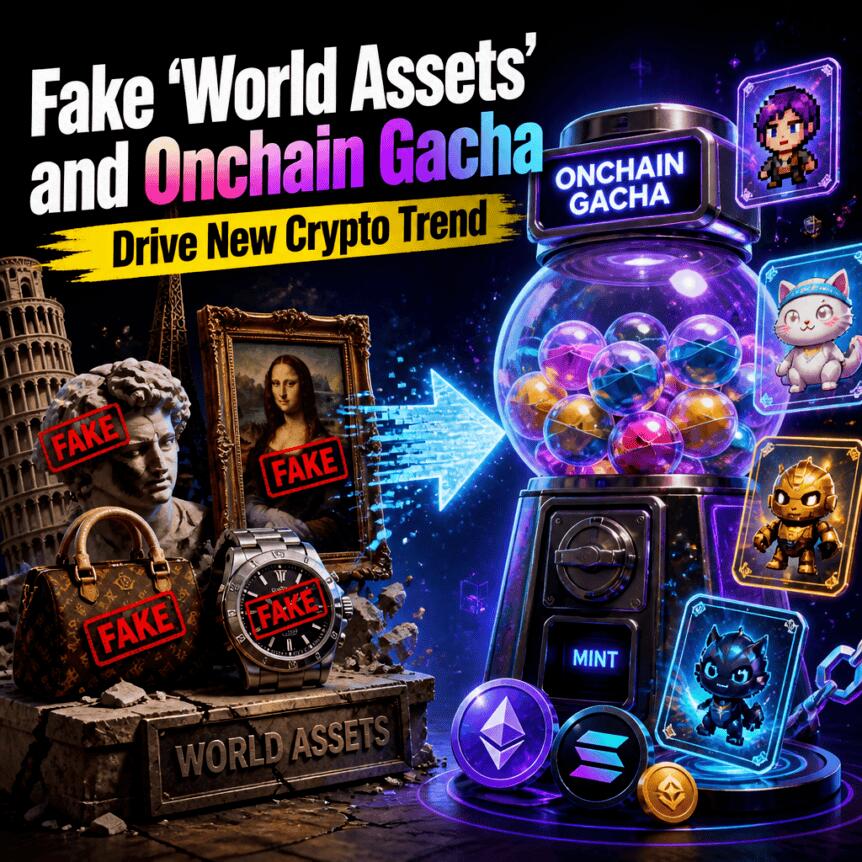
Fake World Assets (FWAs) have reignited attention on Ethereum’s onchain “gacha” niche—an NFT-based system where users pay to spin for randomly selected collectibles. In just days after launch, the protocol reportedly became a top Ethereum gas consumer by fees, underscoring how quickly gamified mechanics can draw speculative participation.
According to DeFiLlama, FWAs briefly ranked as Ethereum’s largest gas consumer over a 24-hour window in late July, with peak daily fees of about $1.53 million on July 25. The project’s token incentive program and the broader appeal of lottery-like gameplay helped drive rapid traction, though skepticism from some market participants suggests much of the current demand may be incentive-driven.
Key takeaways
- Ethereum activity spiked fast: DeFiLlama data shows FWAs briefly became one of Ethereum’s biggest fee consumers by blockspace usage within days of launch.
- Strong early liquidity metrics: Total value locked (TVL) reportedly climbed above $6.15 million by July 31, indicating more than a purely ephemeral burst of interest.
- Fees have normalized after the initial frenzy: Fee revenue eased to roughly $350,000 per day by the latest figures cited in the reporting.
- Demand may be tied to incentives: Investor Simon Dedic argues current participation could be largely fueled by token rewards rather than sustained end-user desire.
- The core bet is on retention: The “real test” for onchain gacha, as framed by critics, will come once incentives fade and novelty wears off.
FWAs surge: from launch to Ethereum gas leader
FWAs are built around an onchain lottery mechanic that trades random NFT outcomes for player participation. Within four days of launch, the protocol reportedly consumed enough Ethereum gas to briefly top the chain’s gas usage rankings by fees over a 24-hour period, according to DeFiLlama.
At the height of the early activity—July 25—FWAs generated about $1.53 million in daily fees, briefly overtaking major stablecoin issuers’ associated onchain activity in the same fee-consumption comparisons. The project’s creators, TokenWorks, publicly celebrated the protocol’s rapid arrival, posting that it had reached a major milestone just days after launch.
While growth appears to have slowed from the peak, the scale remains notable. TVL reportedly rose to more than $6.15 million by July 31. Fee revenue was cited as easing to around $350,000 per day, which implies an annualized run rate of roughly $268 million based on the figures referenced.
How the onchain gacha works
At its core, Fake World Assets uses NFTs as the prize pool. Users pay to interact with an onchain “gacha” machine that selects a randomly chosen NFT backed by Ether. Instead of purchasing a specific NFT directly, participants buy the right to spin and potentially receive one of many collectibles.
TokenWorks has positioned FWAs as part of the broader onchain gacha evolution. The system is described as “latest” within Ethereum-based protocol experiments that apply randomness and game-like purchasing behavior to tokenized collectibles. The prize catalog, as reported, draws from multiple recognizable collections, including CryptoPunks, Azuki, Lil Pudgys, and Art Blocks.
Those who hold NFTs can also participate in the protocol differently: NFT holders are described as liquidity providers who deposit collectibles alongside ETH and receive a share of protocol fees while their NFT remains in the pool. Players, meanwhile, purchase spins for the chance to receive a random NFT and then decide whether to keep the prize or redeem most of its attached ETH value.
Blockworks Research is referenced in the source reporting for an additional detail: around 70% of purchasers allegedly choose to convert their winnings to FWA rather than keeping the received asset, suggesting the system is currently functioning as much like an ETH-linked bet as it is a pure collectible acquisition.
Supporters see gamified commerce; critics worry about incentives
Not everyone is convinced that FWAs represent durable demand. Simon Dedic, founder of Moonrock Capital and an early backer of onchain collectible platforms, expressed enthusiasm for gamified commerce while singling out specific concerns about FWA’s current appeal.
Dedic’s skepticism centers on whether participation reflects genuine consumer interest or is mainly driven by token incentives. In the remarks cited, he characterized the activity as targeted at “crypto degens” seeking to gamble and speculate—an important distinction because incentive-led engagement can diminish quickly once rewards decline.
Other participants and commentators in the reporting highlight the novelty of the combined roles inside the mechanism. The protocol blends player behavior (seeking a favorable random outcome) with “house” behavior (earning fees as an NFT liquidity provider), which some see as a more engaging primitive than simple onchain lotteries or typical NFT marketplaces.
Still, the source framing makes clear that the sustainability question is unresolved. Dedic argues that the industry may be moving toward more gamified shopping behavior as Gen Z’s purchasing power grows, but he also notes a preference for selling assets people actually want—such as widely demanded collectibles—rather than forcing interest through rewards for assets that have little independent pull.
The retention test: novelty vs. real utility
Even if FWAs can keep drawing transaction volume, the long-term question is whether the protocol can continue without strong incentive support. The early numbers—high peak fees, rising TVL, and significant early volume and purchase counts mentioned in the source—suggest there is real attention and a willingness to pay for the mechanic.
However, “hype” can be measured in weeks, not months. If users continue spinning even after incentives taper off, that would indicate the system has found something closer to a retail use case. If activity drops sharply once token rewards lessen, FWAs may follow the pattern of other short-lived crypto experiments that attract bursts of attention but fail to convert them into durable user demand.
What makes the outcome particularly relevant for the broader market is that onchain gacha is part of a wider trend: tokenized versions of familiar collectibles and randomized purchase mechanics. If FWAs demonstrate sustained retention, they could strengthen the case that gamified retail primitives can coexist with token liquidity models. If they fail, it may reinforce the view that the current wave is mostly speculation riding on incentives.
For now, readers should watch how fee generation and participation evolve as token incentives change, and whether a majority of users keep engaging for the collectible mechanic itself rather than primarily for conversion to incentive-linked rewards.
https://www.cryptobreaking.com/fake-world-assets-and-onchain/?utm_source=blogger%20&utm_medium=social_auto&utm_campaign=Fake%20‘World%20Assets’%20and%20Onchain%20Gacha%20Drive%20New%20Crypto%20Trend%20
Comments
Post a Comment