
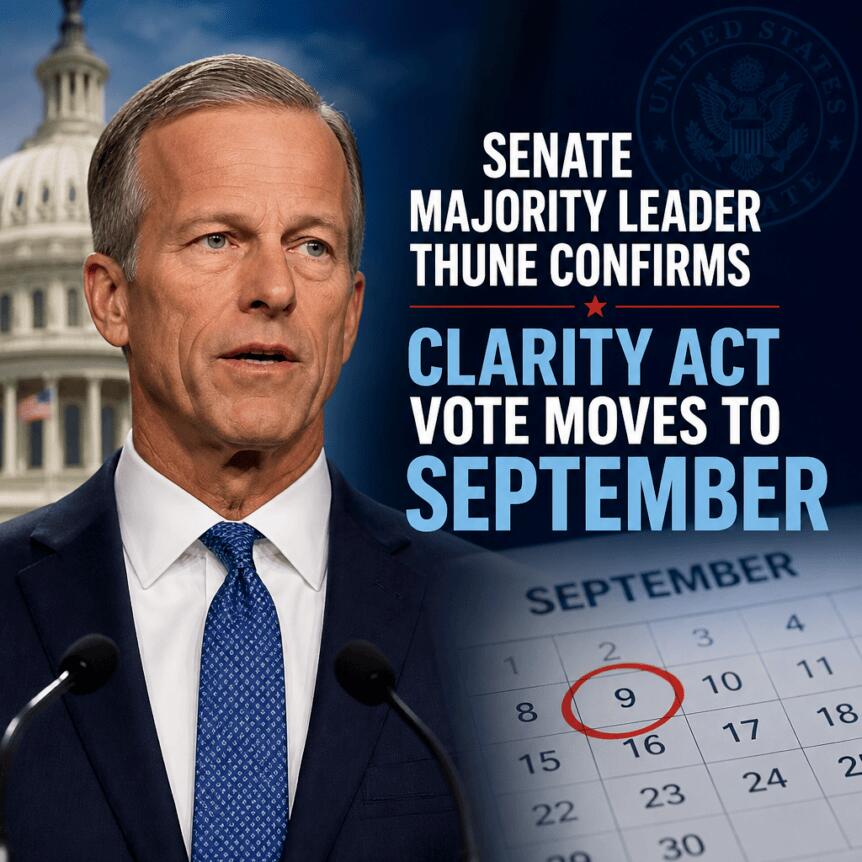
The Senate has postponed the CLARITY Act floor vote until lawmakers return from the August recess. Senate Majority Leader John Thune confirmed the delay and outlined plans for September. As a result, the decision extends negotiations over a federal digital asset regulatory framework.
Senate Leadership Shifts CLARITY Act Vote Beyond August Recess
Senate Majority Leader John Thune confirmed that the Senate will not vote on the CLARITY Act before the August recess. Instead, Republican leadership plans to prepare the legislation for floor consideration after lawmakers return in September. Therefore, the measure remains pending despite earlier expectations of quicker action.
The confirmation followed reports from Capitol Hill indicating that Senate leaders had changed their legislative timetable. The revised schedule places the digital asset market structure bill on the agenda after the recess concludes. Meanwhile, lawmakers will use the break to continue discussions surrounding the proposal.
The delay means the Senate will resume work on the legislation during its September session. Republican leaders had explored options for advancing the bill before leaving Washington. However, the chamber did not complete the required procedural steps before the scheduled recess.
Democratic Concerns Extend Negotiations Over Market Structure Bill
Democratic senators continued seeking additional negotiations before supporting the legislation for a final vote. They maintained concerns over unresolved provisions affecting the broader digital asset regulatory framework. As a result, bipartisan agreement remained incomplete before the Senate adjourned.
Republican leadership had explored procedural paths that could accelerate consideration of several pending measures. Those efforts included discussions surrounding unanimous consent agreements before the recess. Nevertheless, senators did not reach the broad agreement required to move the legislation forward immediately.
The Senate also considered the procedural requirements necessary before floor debate could begin. A cloture process remains one available path for advancing the measure toward debate and voting. Even so, leadership chose to postpone that effort until lawmakers return after the August break.
CLARITY Act Background Keeps Digital Asset Framework in Focus
The CLARITY Act seeks to establish a comprehensive regulatory structure for digital assets across the United States. The proposal aims to define oversight responsibilities and improve regulatory certainty for the industry. Accordingly, lawmakers continue treating the legislation as a significant policy initiative.
The House previously approved the CLARITY Act before sending the legislation to the Senate. That action placed responsibility on senators to review, debate, and determine the bill's future. Therefore, the Senate now holds the next major step in the legislative process.
Supporters argue that the proposal would provide clearer rules for digital asset markets and related businesses. Meanwhile, lawmakers continue examining governance, compliance, and oversight provisions within the legislation. Those discussions remain active despite the delayed voting schedule.
The postponement does not remove the bill from the Senate agenda after the recess. Instead, leadership intends to prepare the legislation for consideration when lawmakers reconvene in September. Consequently, negotiations are expected to continue during the intervening weeks.
Committee work and private discussions may also shape the bill before its return to the Senate floor. Senators from both parties still have opportunities to address remaining policy differences. Therefore, revisions could emerge before leadership schedules the measure for debate.
The Senate's decision reflects the chamber's broader legislative calendar rather than a final judgment on the proposal. Lawmakers still retain multiple procedural options for advancing the measure after the recess. For now, the CLARITY Act remains under Senate consideration as discussions continue toward a possible September floor vote.
https://www.cryptobreaking.com/senate-majority-leader-thune-confirms/?utm_source=blogger%20&utm_medium=social_auto&utm_campaign=Senate%20Majority%20Leader%20Thune%20Confirms%20Clarity%20Act%20Vote%20Moves%20to%20September%20
Comments
Post a Comment