
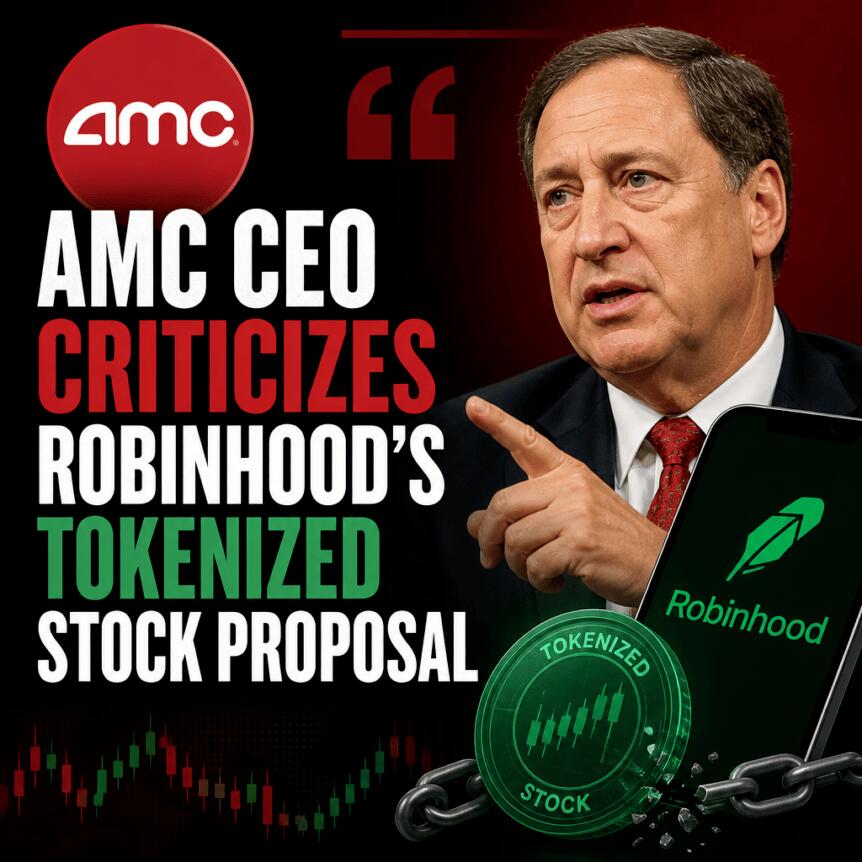
AMC Entertainment CEO Adam Aron has raised fresh concerns about Robinhood’s “tokenized stock” products, arguing that the offerings have no affiliation with AMC and that the company will ask its outside securities counsel to investigate the matter. In an X post on Friday, Aron called Robinhood’s tokenized AMC exposure “outrageous,” adding that Robinhood stock tokens are not registered under U.S. securities laws.
Aron also suggested the products may be restricted from being offered to U.S. investors and face additional limitations in other jurisdictions, including Canada, Switzerland, and the UK. The remarks add to an escalating pattern of scrutiny around tokenized stocks—blockchain-based instruments intended to track the value of traditional listed shares.
Key takeaways
- Adam Aron says Robinhood has “no affiliation” with AMC for its tokenized stock offering and is seeking a review by outside securities counsel.
- Aron characterizes Robinhood tokenized stock products as “outrageous” and says they are not registered under U.S. securities laws.
- The criticism also points to potential cross-border offering restrictions, naming Canada, Switzerland, and the UK.
- The dispute arrives amid broader industry tension over tokenized stock campaigns that have faced cancellations, including in connection with tokenized IPO access.
- Robinhood’s tokenized stock program has evolved from earlier tokenized debt structures to an Ethereum-layer 2 ecosystem centered on Robinhood Chain.
Aron questions Robinhood’s tokenized AMC exposure
Aron’s comments were direct: he told X users that Robinhood has no affiliation with AMC regarding the company’s tokenized stock offerings designed to provide economic exposure to AMC shares. He further stated that Robinhood will request an investigation from outside securities counsel.
While Aron’s post does not spell out specific legal or operational details beyond affiliation and registration concerns, it frames the issue as one of investor-facing legitimacy—both in terms of corporate relationship and compliance with U.S. securities regulations. He also noted that the offerings “may not be offered to US investors” and are subject to restrictions in multiple other countries.
Robinhood co-founder and CEO Vlad Tenev responded publicly on X by asking Aron to share his exact concerns regarding the tokenized offering. According to the reporting, Robinhood did not issue a separate public statement.
What “tokenized stocks” are—and why regulators and issuers are watching
Tokenized stock products are designed to deliver economic exposure to traditional equities using blockchain-based representations. In the case of Robinhood’s ecosystem, the company’s earlier “stock tokens” were launched as tokenized debt securities issued by Jersey-based Robinhood Assets and structured as ERC-20 tokens.
Aron’s criticism reflects a broader debate that has emerged across the tokenized asset market: who bears responsibility for compliance, and what level of legitimacy and disclosure is required when tokenized instruments are tied to the performance of well-known public companies. When issuers or executives claim a lack of affiliation, it can also raise questions about branding, marketing, and investor expectations—especially for retail audiences.
For investors, the key issue is practical: if a tokenized product is not clearly registered—or if jurisdictions treat it differently—then availability, settlement, and redemption pathways may not match what users assume from the “stock-like” wrapper.
Broader backlash linked to tokenized IPO campaigns
Aron’s comments arrive after another high-profile controversy involving tokenized stock offerings tied to IPO access. Earlier this year, major crypto exchanges reportedly canceled tokenized SpaceX IPO allocation campaigns and, in some cases, pointed to execution or delivery limitations tied to underlying asset transfer.
According to earlier reporting cited in the article, platforms including Bybit, Binance, Bitget Wallet, and MEXC canceled tokenized SpaceX IPO campaigns after SpaceX began trading on the Nasdaq. Several platforms attributed their decision to an inability to deliver the underlying assets associated with xStocks, which is described in the article as Kraken-owned.
That episode underscores a recurring vulnerability in tokenized equity narratives: even if tokenization is technically feasible, the compliance and mechanics of delivering the referenced securities—especially on time and in the correct jurisdiction—can determine whether such products remain viable. AMC’s situation may be distinct from IPO access arrangements, but it highlights the same underlying tension between “token-as-stock” marketing and real-world legal and settlement constraints.
Robinhood’s tokenization roadmap: from early tokens to Robinhood Chain
The article notes that Robinhood’s first generation of stock tokens launched in July 2026 as tokenized debt securities issued by Jersey-based Robinhood Assets, using ERC-20 tokens to represent economic exposure to underlying assets such as U.S. stocks and exchange-traded funds.
It also describes Robinhood’s subsequent push into infrastructure that can host tokenized assets. In February, Robinhood launched a public testnet for Robinhood Chain, an Ethereum layer-2 network built using Arbitrum technology. Later, in October 2025, Robinhood shared plans to tokenize nearly 500 U.S. stocks and ETFs on Arbitrum.
In July 2026, the article further points to coverage that Bernstein analysts raised their price target on Robinhood Markets, predicting that tokenized equities and prediction markets would drive growth in the next phase rather than traditional crypto trading.
Taken together, the roadmap illustrates why this dispute matters beyond AMC specifically. If tokenized assets are meant to become a durable product category for retail users, then questions about issuer affiliation, regulatory registration status, and jurisdictional availability can directly affect adoption, partner relationships, and—potentially—compliance strategy across the broader tokenization stack.
What to watch next
Aron says Robinhood will involve outside securities counsel, but the immediate uncertainty for market participants is what the investigation will conclude and whether Robinhood responds with clarifications about the legal basis for its tokenized stock products. Readers should also watch for how other issuers, regulators, and intermediaries react as tokenized equity offerings move from pilot phases toward wider deployment.
https://www.cryptobreaking.com/amc-ceo-criticizes-robinhoods-tokenized/?utm_source=blogger%20&utm_medium=social_auto&utm_campaign=AMC%20CEO%20Criticizes%20Robinhood’s%20Tokenized%20Stock%20Proposal%20
Comments
Post a Comment