
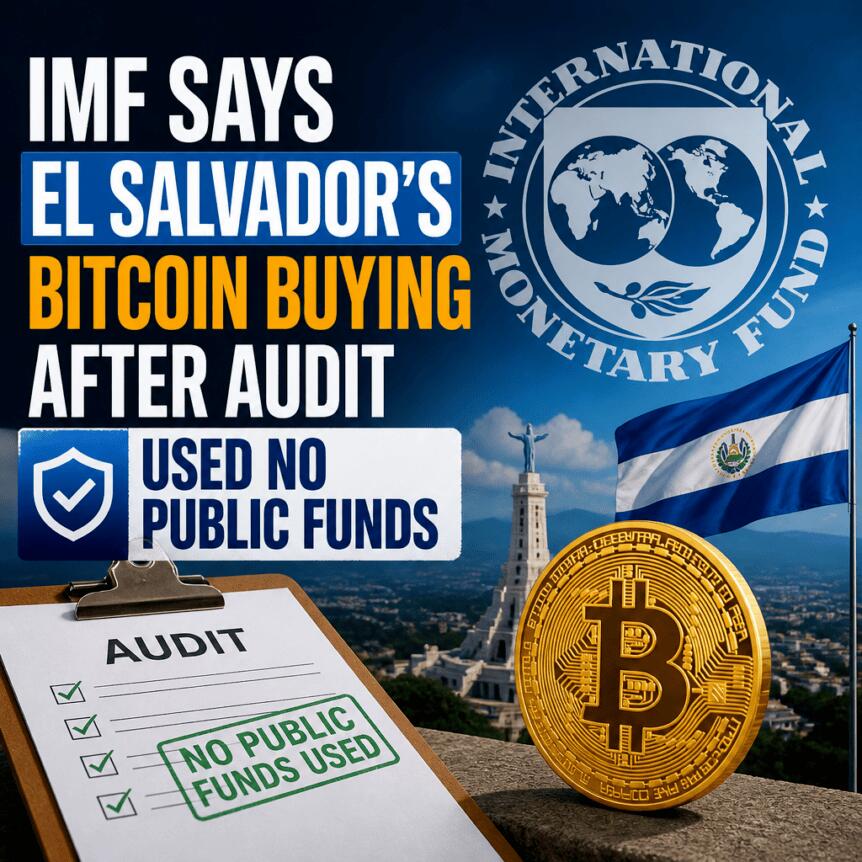
El Salvador’s Bitcoin holdings grew after the International Monetary Fund (IMF) reviewed part of its $1.4 billion program in June 2025, but the IMF says the country did not use public money for the additional accumulation. In a Thursday statement, the lender said documents provided by Salvadoran authorities confirmed that the increase came from private donations rather than government-financed purchases.
The IMF also said operational control of El Salvador’s Chivo wallet has been transferred to a private operator, with the government keeping a minority stake and custodial responsibilities. The IMF added that it does not expect any further Bitcoin accumulation beyond donations that can be documented.
Key takeaways
- The IMF verified that post–June 2025 Bitcoin increases were funded by private donations, not public resources.
- The Chivo wallet’s majority ownership and day-to-day control moved to a private operator, while the government retained a minority stake and custody role.
- The explanation is aimed at addressing renewed compliance concerns after El Salvador publicly reported large Bitcoin purchases in late 2025.
- El Salvador is still holding a sizable Bitcoin reserve—about 7,764 BTC—valued at roughly $628 million at the price level cited by CoinGecko.
IMF: June 2025 accumulation did not involve government funds
According to the IMF, the key point from its June 2025 review was whether El Salvador’s Bitcoin accumulation reflected spending from public resources. In Thursday’s release, the IMF said it checked supplied documentation and found that the additional holdings were linked to private donations.
That matters because El Salvador’s IMF-supported financing arrangement is tied to economic and policy conditions, including boundaries around how public institutions engage with Bitcoin. The IMF’s statement effectively separates “donation-driven” increases from purchases that would otherwise imply further public financing.
Thursday’s release also states that the government does not intend to accumulate additional Bitcoin beyond what is documented as coming from donations—another signal that the IMF is drawing a line around what it considers compliant behavior under the program.
Chivo wallet control shifts, but custodial duties remain
In addition to the funding source question, the IMF’s statement addressed the structure around El Salvador’s Chivo Bitcoin wallet. The lender said majority ownership and operational control of the wallet have been transferred to a private operator, while the government retains a minority stake and custodial responsibilities.
For observers, this distinction goes beyond corporate housekeeping. Earlier IMF discussions around Bitcoin policy placed emphasis on reducing public-sector involvement. By describing a change in operational control and retaining only a narrower government role, the IMF is clarifying how it views the current setup relative to those earlier conditions.
Why the explanation became necessary again
While IMF scrutiny around El Salvador’s Bitcoin purchases has been ongoing, the latest clarification followed renewed controversy after El Salvador said in November 2025 that it had acquired 1,090 BTC valued at $100 million.
That November claim resurfaced questions about whether El Salvador was complying with its IMF program. Earlier coverage noted that the IMF arrangement includes restrictions intended to limit certain kinds of public-sector participation in Bitcoin.
The IMF’s June 2025 verification therefore appears aimed at reconciling the country’s reported reserve increases with the conditions the lender has set—particularly when El Salvador’s Bitcoin office posted that accumulation continued after earlier understandings were reached.
From “unwind Chivo involvement” to “no voluntary accumulation”
The current dispute has roots in the IMF’s original conditions under the financing arrangement. In December 2024, El Salvador agreed to limit public-sector involvement in Bitcoin. The deal outlined several elements: private-sector acceptance of Bitcoin was to be voluntary, taxes were to be paid in US dollars, and government involvement in Chivo was to be unwound.
In March 2025, the IMF issued additional documents barring what it described as “voluntary accumulation” of Bitcoin by the public sector. President Nayib Bukele publicly pushed back, saying purchases were “not stopping” and that El Salvador would continue adding at least one BTC daily.
Subsequently, the Bitcoin Office frequently posted that it was accumulating Bitcoin. In July 2025, the IMF offered an initial explanation for earlier reserve changes, saying no new Bitcoin had been purchased since the December agreement and attributing increases to consolidation among government wallets.
However, the November 2025 announcement about a much larger acquisition renewed doubts. An IMF representative previously told Cointelegraph that the lender would not provide “running commentary” on announcements and would assess compliance in due course. Thursday’s statement can be read as that due-course assessment for the period after the first review.
How big is El Salvador’s Bitcoin reserve now?
Based on the National Bitcoin Office’s official reserve tracker, El Salvador currently holds about 7,764 Bitcoin. Using a price level of $80,900 cited via CoinGecko, the reserve is valued at approximately $628 million.
Importantly, the IMF’s position suggests that at least part of the post-agreement reserve growth is not explained by government purchases, but rather by donation flows that Salvadoran authorities say can be documented. Readers should note that the IMF’s verification focuses on the source of accumulation, not on whether the reserve increased in absolute terms.
Going forward, market participants will likely watch two things closely: whether El Salvador continues to produce documentation supporting donation-linked increases, and how the operational role of the Chivo wallet evolves under the private operator structure. As the IMF turns compliance checks into formal findings, the durability of El Salvador’s Bitcoin narrative under the program may hinge on the clarity—and consistency—of that evidence.
https://www.cryptobreaking.com/imf-says-el-salvadors-bitcoin/?utm_source=blogger%20&utm_medium=social_auto&utm_campaign=IMF%20Says%20El%20Salvador’s%20Bitcoin%20Buying%20After%20Audit%20Used%20No%20Public%20Funds%20
Comments
Post a Comment