
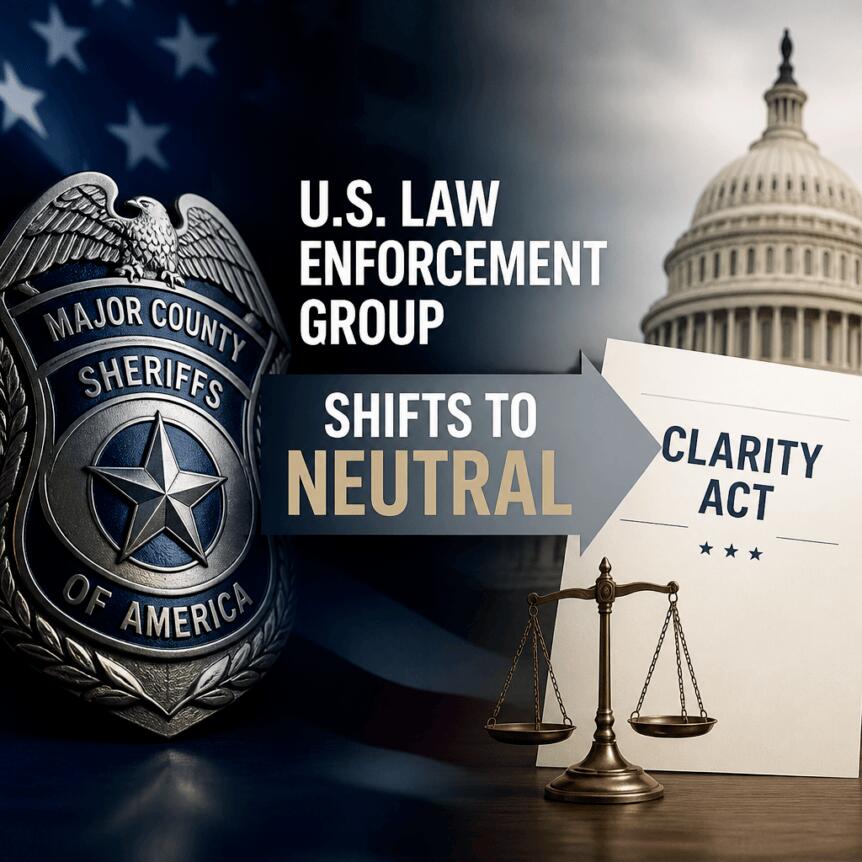
The National Sheriffs’ Association (NSA) has withdrawn its earlier opposition to the Digital Asset Market Clarity (CLARITY) Act, saying in a Thursday letter that its stance is now “neutral.” The development comes ahead of a potential Senate vote later this month when Congress returns to session.
In the letter to Senate Majority Leader John Thune and Minority Leader Chuck Schumer, the NSA pointed to the complexity of the legislative process and the “significant work undertaken” by lawmakers, the Administration, and stakeholders to address “legal, regulatory, and enforcement considerations” tied to the bill. NSA leadership said the group believes it is more constructive to let the legislative process continue as Congress seeks to build a clearer regulatory structure for digital assets.
Key takeaways
- The NSA has changed its position on the CLARITY Act from opposition to “neutral,” signaling less resistance to the bill’s advancement.
- The association’s earlier concern centered on amendments that would exempt crypto mixers from multiple registration requirements.
- House passage in July 2025 has been followed by multiple Senate hurdles, including committee progress and continued debate among lawmakers and stakeholders.
- Senate leaders have taken procedural steps toward a vote, with Thune filing a motion to hold cloture after senators return.
NSA shifts from opposition to neutrality
The NSA’s updated position was articulated by NSA president Troy Wellman alongside CEO and executive director Justin Smith. They said the association is no longer pushing against the measure at this stage, arguing that the most appropriate path is to “step back” and allow Congress to proceed to establish “a clear, effective, and much needed regulatory framework.”
This change represents a notable recalibration from the NSA’s earlier messaging. Previously, the group had expressed “significant concerns” about specific CLARITY provisions—particularly amendments involving crypto mixers and how they could affect registration obligations.
What the NSA previously objected to: crypto mixer exemptions
According to the NSA’s earlier letter, the association’s opposition was driven by provisions it believed could limit law enforcement tools used to trace illicit activity and recover victims’ funds. In that prior stance, the NSA argued that exempting crypto mixers from many registration requirements could “ law enforcement’s ability to trace transactions and digital assets, and recover victims’ money.”
In July, Sheriff Jim Skinner—speaking in a video posted by the NSA—also criticized the framing of the bill, stating, “The CLARITY Act protects the crypto industry, not the public.” Earlier coverage and the Senate Banking Committee correspondence cited by the NSA indicate that mixer-related language was at the heart of the dispute.
While the Thursday letter does not detail which provisions have been addressed or how the group views the bill’s current draft, the shift to neutrality suggests the NSA is at least willing to allow continued consideration rather than maintain active resistance.
CLARITY’s path through Congress remains contested
The CLARITY Act passed the US House of Representatives in July 2025 and has encountered obstacles since being sent to the Senate. While Senate committees—including the agriculture and banking committees—passed versions of the bill in 2026, the measure has continued to face pushback and uncertainty from multiple groups and lawmakers.
Debates described around the legislation have reportedly included issues beyond enforcement logistics, such as stablecoin-related rewards, tokenized equities, and concerns about potential conflicts of interest involving President Donald Trump and his family. These sticking points have kept the bill from reaching a final, unified Senate outcome even after committee progress.
As Congress nears its return to session, procedural moves have also signaled an effort to bring the bill to the floor. Before going on break, Thune reportedly filed a motion to hold a cloture vote on the measure on Sept. 15 once senators return from state work periods—an action that typically aims to limit extended debate and move legislation forward.
Regulators signal they could act even without legislation
Even as CLARITY awaits a Senate path to final passage, US regulators have indicated that crypto oversight may not wait indefinitely for congressional action. Earlier reporting noted that Trump publicly pushed for passage alongside the heads of the Securities and Exchange Commission (SEC) and the Commodity Futures Trading Commission (CFTC), as well as representatives from digital asset companies.
According to earlier coverage, SEC Chair Paul Atkins and CFTC Chair Michael Selig—both nominated by Trump—have signaled that their agencies would continue efforts to address crypto regulation if Congress is unable to pass a market structure bill.
This matters for market participants because it reframes timing and certainty. A shift in the NSA’s position reduces one vocal source of resistance, but it does not remove other policy debates reportedly surrounding stablecoin rewards, tokenized assets, and broader governance concerns. Meanwhile, regulator willingness to proceed without CLARITY could mean the industry faces parallel developments: legislative negotiations in the Senate alongside rulemaking and enforcement direction from the agencies.
As the Senate calendar firms up, readers should watch whether the bill’s most contested provisions—particularly those tied to enforcement and registration—change between committee language and the final text heading to a vote, and whether additional stakeholders follow the NSA’s example by shifting their stance ahead of the chamber’s next steps.
https://www.cryptobreaking.com/u-s-law-enforcement-group/?utm_source=blogger%20&utm_medium=social_auto&utm_campaign=U.S.%20Law%20Enforcement%20Group%20Shifts%20to%20Neutral%20on%20CLARITY%20Act%20
Comments
Post a Comment