
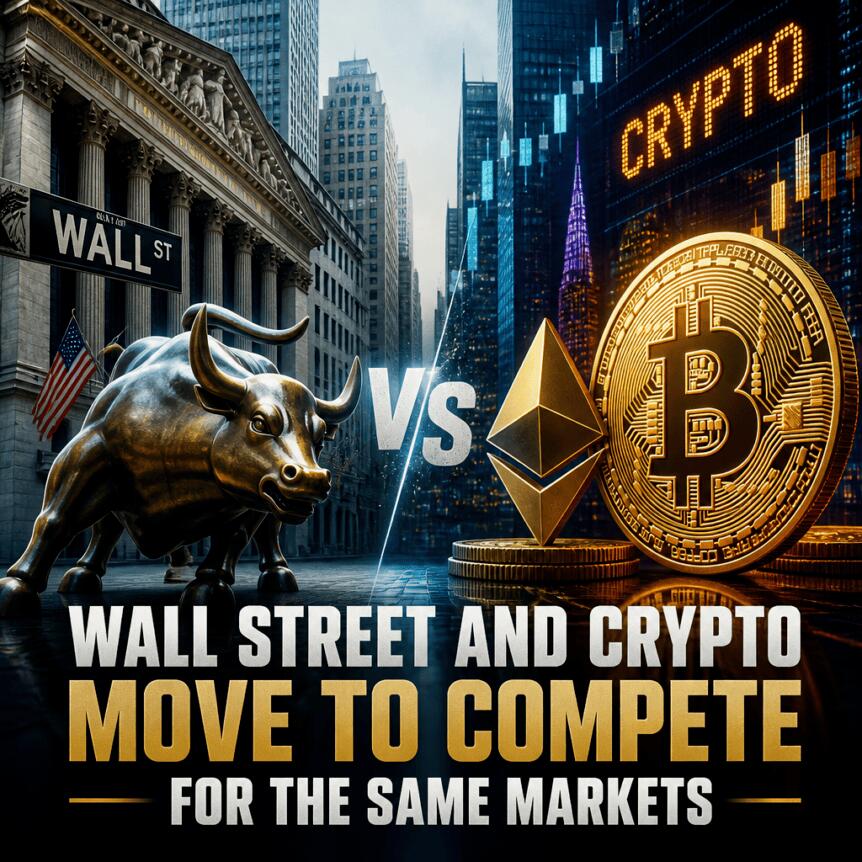
Crypto’s boundary with traditional finance is getting harder to define—fast. This week’s Crypto Biz roundup highlights a shared push by crypto firms and legacy institutions toward the same battleground: stable value transfer, tokenized assets, and the plumbing that moves money and securities.
From Binance deepening its USDC relationship with Circle to Canada’s largest banks testing tokenized deposits, and the New York Stock Exchange pairing with Blockchain.com for tokenized US stocks, the common theme is clear: both sides want to capture distribution and control as financial rails increasingly run on-chain.
Key takeaways
- Binance is investing $100 million in Circle and expanding a USDC deal through a new multi-year commercial agreement tied to USDC balances on Binance infrastructure.
- Canada’s six biggest banks are jointly exploring tokenized Canadian dollar deposits, initially focusing on transfers between participating banks.
- Chainalysis data shows cross-border stablecoin flows rose nearly 78% year through June even as total crypto market cap fell 37%.
- The NYSE is moving toward on-chain distribution of tokenized US stocks and ETFs via a planned alternative trading system with Blockchain.com.
Binance expands USDC ties through Circle investment
Binance is strengthening its partnership with Circle via a combination of equity investment and expanded commercial terms around USDC. According to a report linked to a filing discussed by Cointelegraph, Binance will make a $100 million investment in Circle alongside a five-year agreement intended to expand USDC adoption across the exchange.
In a Tuesday filing referenced in that coverage, Circle reportedly issued Binance 1,237,011 shares of Class A common stock at $80.84 per share as part of a private placement dated Sept. 17. The purchase price was described as below Circle’s market price before the transaction closed, and Cointelegraph noted that Circle’s shares rose after the announcement.
The deal also includes incentives designed to tie Binance’s economics to USDC usage. As described, Circle will pay Binance a monthly incentive fee based on the amount of USDC held through the exchange’s Modular Smart Contract Wallet infrastructure.
Regulatory and governance constraints are part of the structure as well. Binance is reportedly restricted from selling or transferring the Circle shares for up to two years, though the lockup could end earlier under certain termination provisions. During the restriction period, Binance retains voting rights.
For investors and traders, the practical takeaway is that stablecoin distribution is increasingly being treated like strategic market infrastructure rather than a standalone product. Equity alignment plus volume-linked incentives suggest Binance is positioning itself not just as a marketplace for USDC, but as a long-term channel for stablecoin settlement and custody patterns that can follow users across the market.
Canadian banks test tokenized deposits—without changing the legal character
While stablecoins often dominate headlines, Canada’s largest banks are experimenting with a different on-chain narrative: tokenized representations of bank deposits. Cointelegraph reported that the country’s six largest banks are jointly exploring tokenized Canadian dollar deposits—a payment rail that could let digital representations of deposits move between financial institutions.
The banks involved—Bank of Montreal, CIBC, National Bank of Canada, Royal Bank of Canada, Scotiabank, and TD Bank Group—plan to start with a limited scope. The first phase, as described, focuses on transfers between participating banks, with the possibility of connecting to other digital asset networks later.
A key detail is regulatory treatment. Cointelegraph noted that Canada’s Office of the Superintendent of Financial Institutions clarified on Sept. 10 that tokenized deposits are “not legally distinct from traditional deposits.” In other words, blockchain or other technology would not change their underlying legal classification.
That distinction matters because it separates tokenized deposits from the way many fiat-backed stablecoins are typically structured. Tokenized deposits remain liabilities of the issuing banks, whereas stablecoins are not treated the same way under the same liability framework. The banks also argue the model could support faster and programmable payments, and that other deposit-taking institutions may join in the future.
This approach may be especially relevant for Canada’s evolving stablecoin rules. As mentioned in the coverage, the framework applies to non-financial institution issuers, while regulated banks and credit unions fall outside its scope—meaning tokenized deposit experiments can progress while still fitting into how regulators already categorize traditional banking liabilities.
Stablecoins keep moving as crypto market value contracts
Even as broader crypto market capitalization has weakened, stablecoins appear to be gaining momentum—particularly in cross-border usage. Cointelegraph cited Chainalysis data showing cross-border stablecoin flows climbed nearly 78% to $220.3 billion over the year through June, while total crypto market cap dropped 37% to $2.1 trillion.
According to the same Chainalysis-referenced analysis, cross-border stablecoin flows increased 77.5%, and Chainalysis identified 4,708 new cross-border corridors carrying $2.64 billion. Importantly, the largest corridors still dominated value, accounting for 96.1% of total transfer value.
Chainalysis also attributed much of the growth to transfer sizes and patterns that look less like speculation. The firm noted that transfers averaged around $3,000, aligning with use cases like trade, remittances, and savings rather than high-frequency speculative behavior.
Cointelegraph further reported commentary from Tether economist Philip Gradwell, who described the activity as a “steady rhythm” typical of business usage. StraitsX CEO Tianwei Liu pointed to the role of stablecoins in providing dollar access, offering inflation protection, and potentially offering routes around capital controls outside Asia.
There’s also a regulatory undertone to the data. The coverage referenced stablecoin oversight tightening in major jurisdictions, including the US’s GENIUS Act enacted in July 2025, along with the EU’s MiCA framework and Hong Kong’s licensing regime. The implication is that even during periods when overall crypto valuations fall, stablecoin rails may keep attracting demand where traditional settlement systems are slower, less flexible, or more constrained.
NYSE and Blockchain.com pursue tokenized US stocks via a new trading venue
For tokenized assets, the story is shifting from concept to market access. Cointelegraph reported that Blockchain.com and the New York Stock Exchange (NYSE) are teaming up to bring tokenized US stocks and exchange-traded funds to crypto users through a planned alternative trading system (ATS).
The companies reportedly signed a memorandum of understanding covering this digital ATS, which remains subject to regulatory approval. The agreement also includes a market-data partnership between Blockchain.com and NYSE parent Intercontinental Exchange’s ICE Data Services.
In commentary highlighted by the report, TD Securities’ Reid Noch framed the initiative as a bid to capture retail trading activity—particularly as tokenized markets enable 24-hour and weekend trading. Talos’ Tanay Ved also argued that crypto venues are increasingly evolving into multi-asset platforms rather than staying isolated within purely digital-asset categories.
Demand signals cited in the coverage point to growing participation: RWA.xyz reported that tokenized stocks have reached $3.14 billion in value and that the number of holders rose 72% to 3.87 million.
The partnership also arrives alongside regulatory scaffolding for tokenized securities. Cointelegraph noted that the US Securities and Exchange Commission introduced a five-year Innovation Exemption for certain tokenized securities venues. The coverage described eligible tokenized stocks as representing actual shares that carry the same economic and governance rights as traditional counterparts.
For market participants, this development matters less as a “tokenization trend” and more as a distribution question: which platforms and venues will allow tokenized equities to reach everyday investors. If the ATS receives approval, it could accelerate how quickly tokenized products shift from niche issuance toward usable liquidity with established market-data infrastructure.
Across these stories, the next watch-item is the same: whether on-chain rails—stablecoins, tokenized deposits, and tokenized equities—can scale under real-world compliance constraints without fragmenting liquidity. Investors should track the practical rollout timelines, especially where regulatory approvals and lockups determine how quickly access expands.
https://www.cryptobreaking.com/wall-street-and-crypto-move/?utm_source=blogger%20&utm_medium=social_auto&utm_campaign=Wall%20Street%20and%20Crypto%20Move%20to%20Compete%20for%20the%20Same%20Markets%20
Comments
Post a Comment