
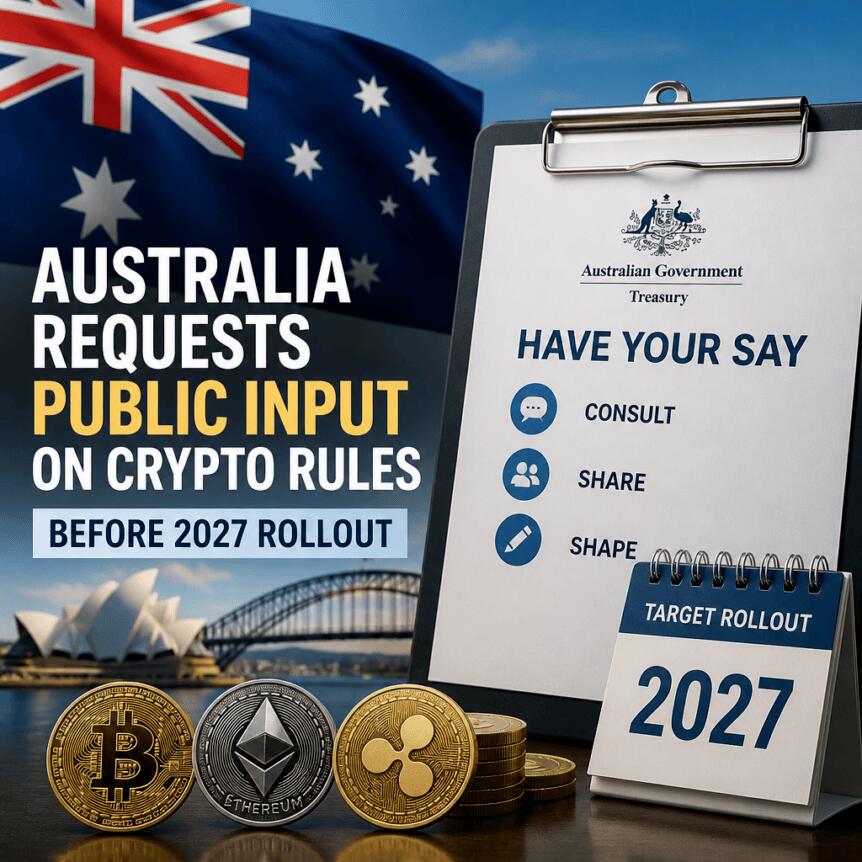
Australia’s corporate regulator has moved closer to implementing its digital-asset rulebook, launching a consultation that sets out proposed capital, custody and trading requirements for crypto platforms. The consultation, issued by the Australian Securities and Investments Commission (ASIC), comes as the regulator prepares to apply legislation passed in April that expands oversight of the industry.
The proposals—published as Consultation Paper 392—outline three alternative capital models, restrictions aimed at conflicts of interest, and quarterly reporting requirements for custody wallets that hold customer assets. ASIC is also asking for feedback on how offshore custody should work in practice, including what safeguards might be needed if an overseas custodian or parent company fails.
Key takeaways
- ASIC’s CP 392 proposes three capital models, including one that would require net tangible assets of at least A$14 million (about $9.7 million) or 10% of average revenue, whichever is greater.
- Platforms would face quarterly reporting to ASIC of custody wallet structures and addresses, with certain records retained for seven years.
- ASIC is considering offshore custody, while seeking feedback on safeguards such as whether Australian operators should have emergency access to private keys.
- New guidance would include restrictions on trading for a platform’s own account to reduce conflicts of interest, with model-specific exceptions.
- The consultation window runs until Nov. 27, with ASIC targeting final standards and guidance in March 2027.
Consultation sets the compliance baseline for Australia’s digital-asset platforms
ASIC’s consultation is positioned as the practical implementation step for the Corporations Amendment (Digital Assets Framework) Act, which Parliament passed earlier this year. In remarks accompanying the release, ASIC Commissioner Alan Kirkland said the draft guidance and standards recognize the growing role of digital assets and tokenization across financial services.
Industry bodies and operators largely framed the update as a shift from policy development to operational compliance. Amy-Rose Goodey, CEO of the Digital Economy Council of Australia, said CP 392 marks an important milestone, noting that the focus has moved toward implementation after years of engagement on regulatory reform.
OKX Australia CEO Shange Chandra welcomed the proposals as well, arguing they could encourage consolidation by raising the compliance bar. In his view, rules that are “appropriately onerous” will reward companies that have already invested in capital, custody arrangements and compliance, while putting pressure on operators that have deferred those investments.
How capital and custody rules could reshape platform operations
A central component of CP 392 is the regulator’s attempt to define how much financial resilience crypto platforms should maintain. ASIC is weighing three alternative capital models, including a specific approach that would apply to operators that do not have qualifying third-party custody arrangements. Under that model, the capital requirement would be the greater of A$14 million in net tangible assets or 10% of average revenue.
Goodey indicated that the industry will be examining how the competing capital models scale across business sizes and what concessions may apply where third-party custody arrangements are used.
On custody, ASIC’s proposals acknowledge that domestic-only arrangements may not be realistic for a globally connected market. Goodey described ASIC’s stance on not mandating domestic custody as significant, pointing to the global nature of digital-asset markets.
At the same time, ASIC is seeking feedback on the safeguards that should accompany offshore custody. The consultation specifically raises whether Australian operators should have emergency access to private keys if an overseas parent or related company involved in custody arrangements fails. This is a key uncertainty for market participants: offshore custody can reduce friction and leverage existing infrastructure, but regulators appear focused on ensuring continuity and recoverability in worst-case scenarios.
Quarterly wallet reporting and recordkeeping requirements
Beyond capital and custody, CP 392 introduces operational transparency obligations. ASIC proposes that operators report details about the custody wallet structures and addresses to the regulator on a quarterly basis. The consultation also calls for records to be kept for seven years, which will affect compliance workloads and retention systems.
In comments attributed to Thomsons partner Liam Hennessy, the reporting proposal is partly linked to how much of the Australian market relies on offshore infrastructure. With global competition shaping custody practices, Hennessy said it is common for digital assets to be held offshore—making visibility into wallet structures and addresses a regulatory priority.
Trading restrictions target conflicts of interest
ASIC’s draft standards also address conduct risks, including conflicts that can arise when a trading venue both executes client orders and positions itself for profit. The consultation proposes restrictions on platforms trading for their own account and accepting benefits intended to favor particular tokens.
Hennessy said these rules could challenge existing trading models. In his explanation, under ASIC’s approach an order matching system—described as DAP (one that brings client orders together, by order book or by matched principal trading)—could not trade as principal on its own platform, and related bodies corporate could not trade as principal through it.
He also cautioned that there are exceptions tied to specific models. For groups that depend on an affiliated market maker, he advised that these exceptions should be reviewed early, since the practical impact may vary depending on how trading arrangements are structured.
Timeline: feedback through Nov. 27, with implementation slated for 2027
CP 392 is part of ASIC’s broader 18-month implementation roadmap for the Digital Assets Framework Act, which the regulator published after the legislation was passed in April. ASIC is inviting public feedback until Nov. 27.
Looking ahead, ASIC said it aims to publish final standards and guidance in March 2027. The law is scheduled to take effect on April 8, 2027. Operators will then have until Oct. 7, 2027 to apply for the relevant license, and they may continue operating while ASIC assesses applications.
For market participants, the immediate task is to assess whether their capital structure, custody arrangements, and trading mechanisms can meet the draft requirements—especially around offshore custody safeguards and principal trading limits—and to submit targeted feedback before the Nov. 27 deadline.
https://www.cryptobreaking.com/australia-requests-public-input-on/?utm_source=blogger%20&utm_medium=social_auto&utm_campaign=Australia%20Requests%20Public%20Input%20on%20Crypto%20Rules%20Before%202027%20Rollout%20
Comments
Post a Comment