
Self-custody has become an increasingly important consideration for cryptocurrency holders, especially following repeated security incidents involving centralized platforms, online wallets and third-party infrastructure.
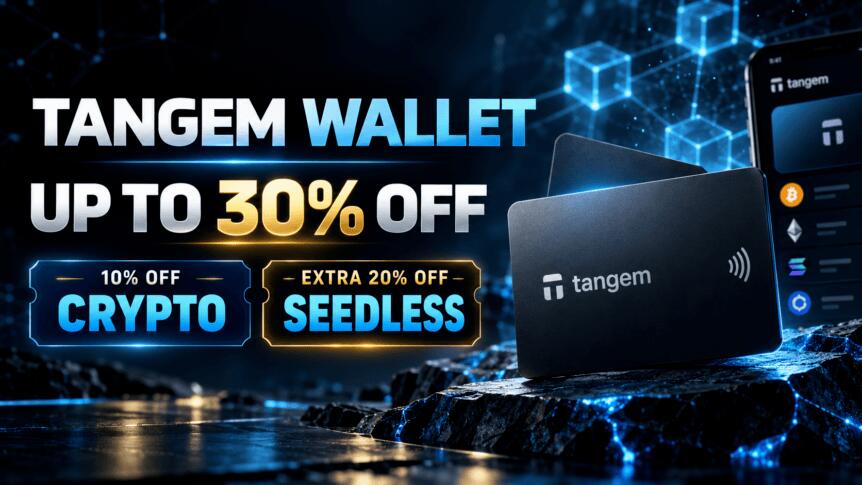
For anyone considering moving digital assets to a hardware wallet, a new limited-time Tangem promotion could make the switch considerably more affordable. By combining the discount associated with the code CRYPTO with the additional promotion available through SEEDLESS, eligible purchases may receive a total discount of up to 30%.
The offer applies through the official Tangem store and can be used on eligible wallet products, subject to the conditions displayed during checkout.
How the Tangem discount works
Two promotional codes are currently associated with the offer:
- CRYPTO: provides a 10% discount.
- SEEDLESS: provides an additional discount of up to 20% as part of the current promotion.
When both benefits are available for the selected product, the total advertised saving can reach up to 30%.
To access the promotion, visit the Tangem store through the dedicated link below, choose the preferred wallet set and check that the available discounts have been applied before completing the purchase.
Check the Tangem offer and current price
If a code is not applied automatically, enter CRYPTO and SEEDLESS in the promotional section of the checkout process, following the instructions shown on the store.
As promotional conditions can change, customers should always verify the final price displayed before confirming the order. Depending on how the discounts are calculated and combined, the effective reduction from the original price may differ slightly from the headline percentage.
What makes Tangem different from traditional hardware wallets?
Tangem takes a different approach from hardware wallets built around screens, cables, batteries and manually installed firmware updates. Its wallet comes in the form of an NFC-enabled card that communicates with the official mobile application when tapped against a compatible smartphone.
The private key is generated and stored inside the card’s certified Secure Element. Cryptographic signing also takes place inside the chip, meaning the private key is not exposed to the smartphone or transmitted outside the wallet during normal use.
Users can configure multiple cards as backups. Each card provides access to the same wallet, allowing one card to be used regularly while the others are stored separately in secure locations.
Tangem also supports two different approaches to recovery:
- A seedless setup, in which the private key is generated inside the card and backed up directly to the other cards in the set.
- An optional traditional seed phrase for users who prefer a conventional recovery method or want to import an existing wallet.
The seedless option removes the need to write down and protect a recovery phrase that could be photographed, copied, lost or discovered by another person. However, users remain responsible for protecting their backup cards and access code.
How Tangem reduces firmware supply-chain risk
One of the most interesting elements of Tangem’s security architecture is its use of immutable card firmware. The firmware installed during manufacturing cannot be replaced or updated after the card has been produced.
This design removes a specific attack surface found in devices that depend on downloadable firmware updates. If a device has no post-production firmware update mechanism, an attacker cannot compromise that mechanism later to distribute malicious firmware to existing cards.
The Tangem application also performs a cryptographic authenticity check when communicating with a card. This helps verify that the wallet is genuine and that it is running authentic firmware before it is used.
This architecture is relevant when discussing supply-chain security. In December 2023, for example, malicious code was published through Ledger Connect Kit, a JavaScript library used by third-party decentralized applications. Ledger clarified that the incident did not compromise the integrity of its hardware devices or Ledger Live, but it demonstrated how software dependencies and distribution channels can become attractive targets.
Tangem’s immutable firmware makes an equivalent attack through a card firmware update channel extremely difficult because that update channel simply does not exist. It also reduces the level of continuing trust users must place in a manufacturer’s ability to protect firmware-signing keys and update infrastructure.
This does not mean that every possible supply-chain attack becomes impossible. Mobile applications, external libraries, online interfaces, logistics and user behaviour can still create risks. Users should therefore buy from an official or authorized source, install only the official application and carefully review every transaction before signing it.
Independent security audits
Tangem’s hardware, firmware and mobile software have undergone reviews from independent security companies, including Kudelski Security, Riscure and Cure53.
According to Tangem’s published security documentation, these assessments covered areas such as Secure Element usage, firmware integrity, smartcard code, mobile wallet behaviour and cryptographic key management. The company reports that no critical vulnerabilities were identified in the published audits.
The wallet’s architecture is designed so that transaction preparation happens in the application, while the sensitive cryptographic signature is produced inside the hardware card. Separating these functions helps limit the exposure of the private key, even if the phone is used for viewing balances and preparing transactions.
Who may find Tangem useful?
Tangem may be particularly suitable for users who want the protection of an offline hardware wallet without managing a device with buttons, cables or a battery.
Its card-based format can be practical for:
- Long-term cryptocurrency holders moving assets away from exchanges.
- Users looking for a portable wallet that works through NFC.
- People who prefer physical backup cards instead of relying exclusively on a written seed phrase.
- Beginners who want a relatively simple introduction to self-custody.
- Experienced users who want an additional cold wallet for separating long-term holdings from daily activity.
As with every self-custody solution, buyers should evaluate the recovery model carefully. Losing every backup card and any configured recovery information may result in permanent loss of access to the wallet.
How to claim the discount
- Open the official store through the dedicated Tangem link.
- Select the wallet, card set or other eligible product.
- Check whether the CRYPTO discount has been applied.
- Apply the promotional code SEEDLESS where requested.
- Confirm the final discount and total price before paying.
Visit the Tangem store and check the available discount
The promotion is expected to be available for a limited period and may vary depending on the selected product, delivery country and other active offers. Availability should therefore be confirmed directly in the checkout.
Disclosure: Crypto Breaking may receive a commission when a purchase is completed through links in this article, at no additional cost to the buyer.
https://www.cryptobreaking.com/tangem-wallet-discount-save-up/?utm_source=blogger%20&utm_medium=social_auto&utm_campaign=Tangem%20Wallet%20Discount:%20Save%20Up%20to%2030%%20With%20CRYPTO%20and%20SEEDLESS%20
Comments
Post a Comment