
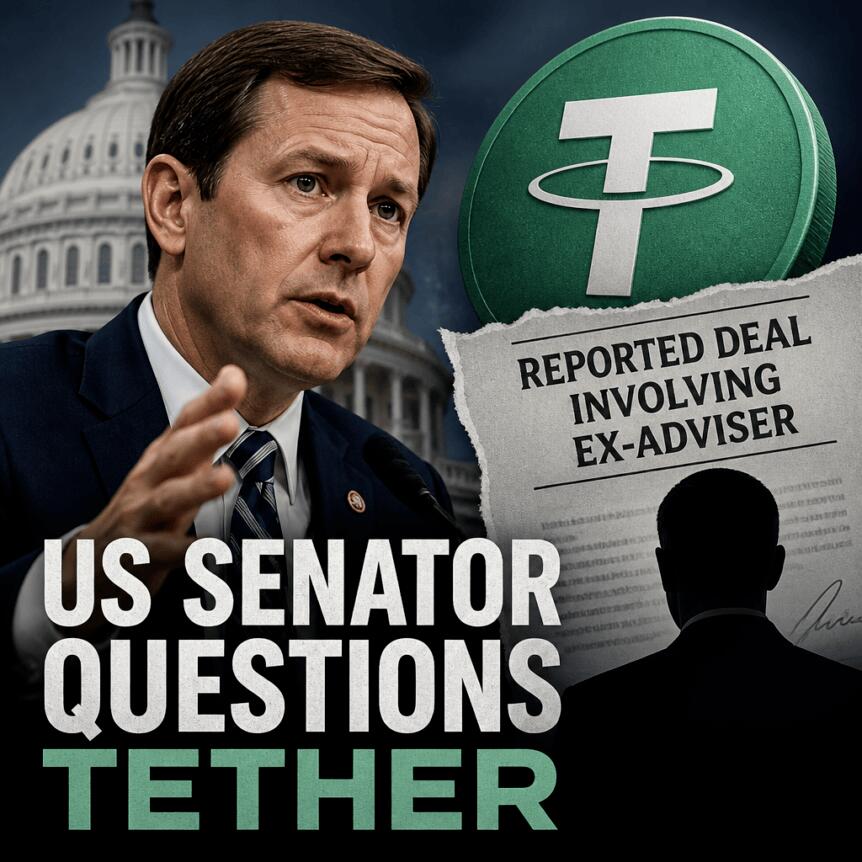
Connecticut Sen. Richard Blumenthal has escalated a Senate investigation into Tether’s alleged relationships with a marketing company linked to former White House crypto adviser Bo Hines. The probe centers on claims that Tether entered into a $6.3 million marketing arrangement with Nxum, and that the dealings may have involved lobbying coordination around pending stablecoin legislation.
In a letter to Tether CEO Paolo Ardoino, Blumenthal said the Senate Permanent Subcommittee on Investigations is requesting records and information covering contracts, payments, communications, and lobbying activity involving Tether and Nxum. Blumenthal also pointed to allegations that messaging between parties indicated direct coordination on efforts related to the GENIUS Act, a bill intended to regulate stablecoins.
Key takeaways
- Blumenthal’s letter asks for Tether records tied to Nxum, including contracts, payments, communications, and lobbying activity.
- The senator alleges the arrangement may have involved improper coordination around the GENIUS Act stablecoin legislation.
- Hines is accused of not divesting a stake in Nxum while working on stablecoin-related policy discussions and later joining Tether in a strategic role.
- Tether told Cointelegraph that an external counsel found no evidence of wrongdoing after a prior internal investigation.
- Upcoming U.S. midterm politics could affect the scope and leverage of investigations into crypto-industry conflicts.
What the Senate subcommittee is seeking
According to Blumenthal, the subcommittee’s request is aimed at reconstructing how the Tether–Nxum relationship functioned in practice. The letter demands documents and information related to “contracts, payments, communications, and lobbying” between Tether and Nxum, which Blumenthal connects to Bo Hines’ activities.
The senator’s concerns were amplified by an earlier Wall Street Journal report, referenced in the Cointelegraph coverage, which described a $6.3 million deal between Tether and Nxum.
Blumenthal’s stated framing is that the investigation fits into broader allegations about the Trump administration’s alleged “self-enrichment and self-dealings with cryptocurrency firms.” The implication for investors and market participants is straightforward: stablecoin issuers operate under intense political scrutiny, and questions about influence-buying or regulatory capture can directly affect perceived compliance risk and reputational standing.
Blumenthal’s allegations around GENIUS Act lobbying
Blumenthal asserted that Hines did not divest his one-third stake in Nxum while allegedly coordinating with Nxum using encrypted messaging applications. The senator claimed these communications were used to coordinate lobbying, advocacy, and pressure campaigns targeting members of Congress who were opposed to, or sought changes to, stablecoin legislation.
In addition, Blumenthal alleged that the messaging purportedly demonstrated direct coordination between Tether and Nxum’s efforts concerning the GENIUS Act. The letter includes the claim that Tether CEO Paolo Ardoino demanded Nxum “obliterate” opponents of the bill.
“The highly unusual terms and nature of Tether’s business relationship with both Nxum and Bo Hines raise alarming ethical and legal concerns, indicating that Tether was likely well aware of the illegality and impropriety of issuing payments to a current White House official with such a direct role in shaping cryptocurrency legislation that was instrumental to its business.”
Tether’s response and the timeline of key personnel
Tether has rejected the allegations. A Tether spokesperson told Cointelegraph that the company was aware of the claims and that an external counsel “found no evidence of wrongdoing” after a previous “in-depth internal investigation.”
The dispute also intersects with personnel transitions described in the coverage. Blumenthal noted that Hines worked as executive director on the President’s Council of Advisers on Digital Assets from January to August 2025, before leaving to become a “strategic adviser” at Tether. After that, Hines later became CEO of Tether US.
The article also references another senior figure: Harry Jung, described as a crypto adviser in the Trump administration. Jung left his role in July 2026 and joined Nxum as a managing director in August.
For market observers, these details matter because stablecoin governance and regulatory engagement are closely watched. Even when investigations do not lead to findings, the combination of alleged cross-linked relationships—between policy staff, outside firms, and a major issuer—often affects how counterparties, lawmakers, and regulators assess a company’s risk profile.
Why the midterm outcome could change the pressure
Blumenthal’s ability to drive investigative activity depends partly on committee and congressional control. While he is the Democratic ranking member of the Senate Permanent Subcommittee on Investigations, the outcome of the 2026 midterm elections could influence how much authority he and other Democrats may have in pursuing inquiries related to alleged crypto conflicts of interest.
As of Friday, election prediction markets reportedly favored Democratic retaking of majority control of both chambers of Congress in 2027. Cointelegraph notes that event contracts on Kalshi and Polymarket reflected 92% and 68% chances for Democrats on Kalshi for the House and Senate, respectively. The U.S. Election Day is on Nov. 3.
In practice, that means the next political phase could determine whether requests like Blumenthal’s letter lead to deeper document production, hearings, or broader scrutiny of stablecoin policy and the industry’s Washington relationships.
Wider political scrutiny over crypto-linked influence
Beyond this specific dispute, the article situates the investigation within ongoing allegations that the Trump administration and its affiliates may be reaping financial benefits tied to crypto policy decisions. It notes that President Trump, his family, and members of his administration continue to face scrutiny over accusations that they profit from policies over which they have control or influence.
Cointelegraph’s coverage also references disclosures that Trump reported earning $1.4 billion from investments related to crypto in 2025.
Readers should watch for how Tether responds to the Senate’s document requests and whether the investigation expands beyond contract and communications records to include findings tied to lobbying strategy around the GENIUS Act. The next key uncertainty is whether political control after the midterms increases the likelihood of public hearings or additional subpoenas.
https://www.cryptobreaking.com/us-senator-questions-tether-after-2/?utm_source=blogger%20&utm_medium=social_auto&utm_campaign=US%20Senator%20Questions%20Tether%20After%20Reported%20Deal%20Involving%20Ex-Adviser%20
Comments
Post a Comment