
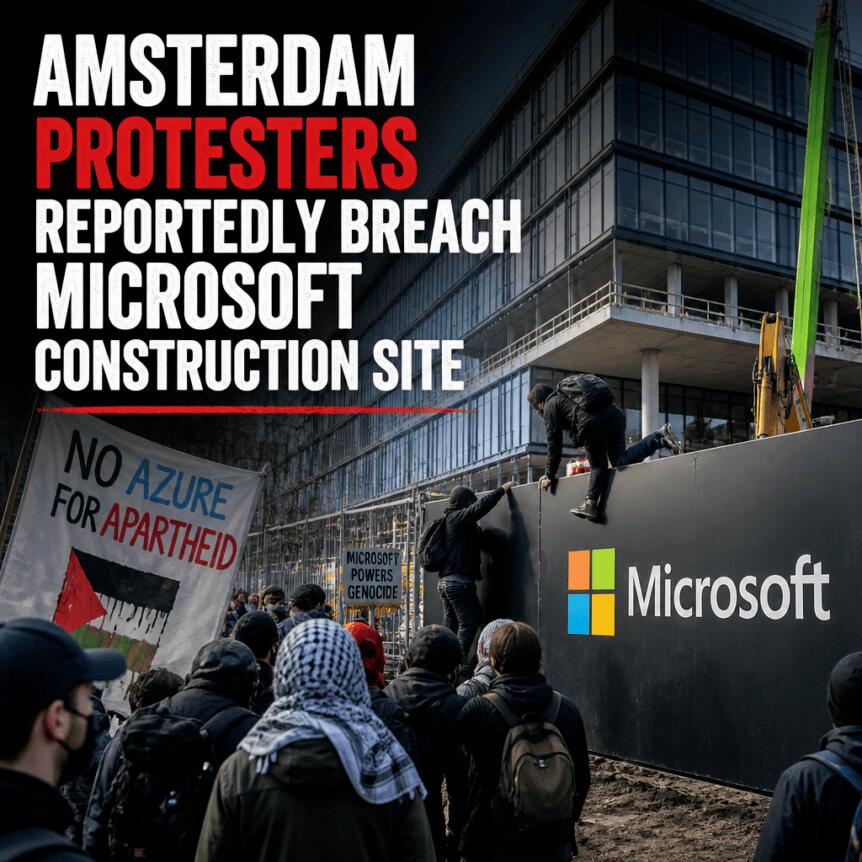
Protesters reportedly breached a construction site in Amsterdam tied to Microsoft’s data center plans, leading to clashes with police, according to an Associated Press report released Friday. Dutch authorities said they detained between 150 and 200 people for trespassing.
One participant, speaking to a local broadcaster, said the demonstration was aimed at stopping work on the facility. Microsoft acknowledged the protest and said it understands public concern while drawing a firm line against unsafe or unlawful behavior.
Key takeaways
- Dutch police detained 150–200 people after protesters entered a Microsoft data center construction site in Amsterdam.
- The Associated Press report cites a protester’s claim that the action was intended to halt construction.
- Microsoft said it respects peaceful public expression but does not support actions that are unlawful or endanger safety.
- AP links the incident to broader expectations of tighter regulation in the US following recent midterm elections.
Amsterdam protest escalates into police detentions
The demonstration at a Microsoft-associated construction site in Amsterdam escalated quickly, with protesters reportedly breaking in and police responding to clashes on site. Dutch authorities attributed the arrests to trespassing, detaining an estimated 150 to 200 people, according to the Associated Press.
The AP report also includes testimony from a protester who told a local broadcaster that the group’s goal was to stop the data center’s construction. While the report describes the intent behind the protest, it also makes clear that law enforcement treated the incident as an unlawful intrusion requiring mass detention.
Microsoft responds: peaceful speech, not risky disruption
Microsoft’s position, as relayed by the Associated Press, emphasizes the company’s willingness to recognize public frustration with major infrastructure projects. A spokesperson said: “We understand that people feel strongly about the project, and we respect their right to express those views peacefully.”
At the same time, the spokesperson added that Microsoft “do not condone any actions that are unlawful or that put people’s safety at risk.” For investors and stakeholders watching the data center buildout, that distinction matters: it signals that major infrastructure operators expect activism to remain within legal boundaries, even as political and social pressure grows around energy use and land development.
Why data centers have become a flashpoint
AP frames the Amsterdam episode as part of a wider backlash that is increasingly centered on data centers’ resource footprint. The report points to how large facilities can require substantial amounts of electricity and water, and it notes that US political momentum after the midterm elections is expected to intensify scrutiny of such projects.
That shift is particularly relevant for the technology sector because data center expansion has become closely linked to artificial intelligence infrastructure and broader cloud demand. When protests target construction sites, the message is often not simply opposition to a single company, but pressure on the pace and scale of data center growth—and the permitting and regulatory frameworks that govern it.
In practical terms, more contentious permitting and enforcement can affect timelines, raise compliance costs, and increase uncertainty for operators trying to plan long-term capacity.
Regulatory tightening expected after US midterms
The Associated Press report connects the growing political attention to data centers with promises by Democrats following the recent midterm elections to “clamp down on data centers,” AP writes. While the article does not specify which policy changes are imminent, it suggests a more restrictive environment is likely to take shape as officials push back on resource consumption and environmental concerns.
The direction of travel is already visible in other jurisdictions. Earlier coverage from Cointelegraph in September described how the town of Plattsburgh, New York, held a public hearing to consider a temporary land-use moratorium covering operations that include AI data centers and crypto mining. That earlier step indicates that, beyond national policy shifts, local governments are increasingly using zoning tools and temporary pauses to manage infrastructure that competes for land, power, and water.
For the broader crypto ecosystem, the intersection is meaningful. Data centers can underpin the computing infrastructure needed for energy-intensive activities, and regulatory decisions that constrain facility expansion may indirectly affect electricity availability, costs, and the operating environment for both traditional and blockchain-related workloads.
What to watch next
Readers should watch whether Amsterdam-style disruptions lead to changes in permitting conditions, police enforcement, or additional protests elsewhere, and whether US policymakers translate post-midterm rhetoric into concrete regulations affecting data center expansion and resource planning.
https://www.cryptobreaking.com/amsterdam-protesters-reportedly-breach-microsoft/?utm_source=blogger%20&utm_medium=social_auto&utm_campaign=Amsterdam%20Protesters%20Reportedly%20Breach%20Microsoft%20Construction%20Site%20
Comments
Post a Comment