
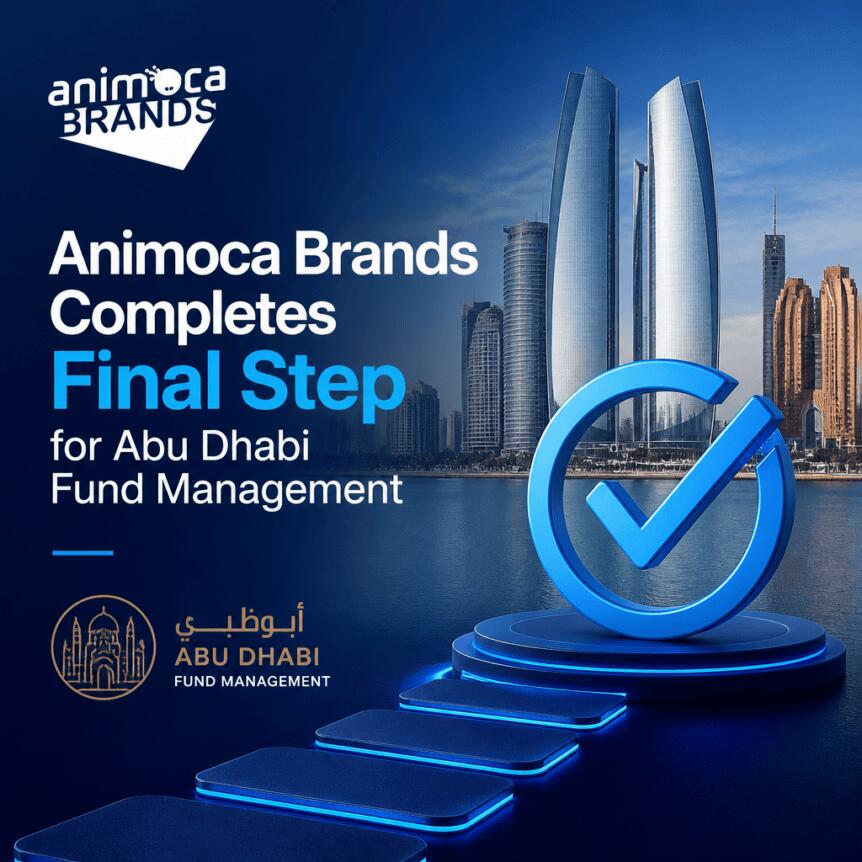
Animoca Brands has received regulatory authorization in Abu Dhabi that broadens how it can manage investment capital for institutions. The company said on Monday that its subsidiary, Animoca Asset Management (AD) Limited, has been approved by Abu Dhabi Global Market’s Financial Services Regulatory Authority (FSRA) to oversee non-retail investment funds.
The move marks another step in Animoca’s multi-jurisdiction push to formalize its crypto- and gaming-linked operations into regulated financial services, after earlier approvals and licensing progress in the region. For investors and partners, the practical difference is that the authorization allows the firm to pool professional investors’ money under FSRA oversight, rather than serving retail investors.
Key takeaways
- Animoca Asset Management (AD) Limited received FSRA approval in Abu Dhabi to manage non-retail investment funds.
- The authorization was completed after an in-principle approval first announced in November 2025, with the final approval taking effect on Oct. 13.
- Animoca has also expanded regional regulatory coverage, including a Dubai license announced in February for virtual asset brokerage and investment management.
- The company’s broader strategy, as previously outlined in an investor update, centers on building regulated financial services capabilities while allocating more focus to institutional digital-asset use cases.
FSRA approval completes Animoca’s Abu Dhabi fund-management process
According to Animoca Brands, the authorization was granted to its Abu Dhabi-based asset management subsidiary, Animoca Asset Management (AD) Limited. The FSRA authorization covers the management of funds that pool capital from professional investors—an important distinction from retail-oriented products because it generally implies a more stringent compliance and suitability framework.
Animoca said the approval became effective on Oct. 13. The timeline is notable because the process didn’t begin with the final authorization; the firm previously received in-principle approval in November 2025. The completion announced Monday effectively closes that loop, moving from regulatory permission in principle to an operational authorization status.
The Abu Dhabi step comes as more crypto-native firms in the Middle East seek regulated pathways for asset management and institutional financial services. In this environment, the ability to structure and manage funds under local oversight can influence how effectively companies attract professional capital and comply with regional reporting expectations.
From mobile games to regulated finance
Animoca Brands traces its roots to mobile gaming. The company was originally spun off from Animoca in 2014, building and publishing games based on licensed brands while also producing original titles. The shift to blockchain matters because it set up the firm’s later pivot into venture investing and token-adjacent activity.
In 2018, Animoca said it shifted its focus toward blockchain and then developed an investment portfolio that included OpenSea, Dapper Labs, and the developer of Axie Infinity, Sky Mavis. While those investments are not the same as running regulated financial products, they helped create the expertise and networks that increasingly support institutional-facing services.
In a September investor update, Animoca described a broader transition from being primarily a digital asset and Web3 operator into a regulated financial services institution working across multiple jurisdictions. It framed this as part of a wider industry trend in which crypto-native companies attempt to bring more formal financial services structures into their business models.
How the Dubai license complements the Abu Dhabi authorization
Animoca’s Abu Dhabi announcement follows related regulatory progress in Dubai. Earlier coverage from Cointelegraph noted that the company secured a Dubai license in February to provide virtual asset brokerage and investment management services for institutional and qualified investors. That licensing choice aligns closely with what investors often ask for in practice: not just exposure to digital assets, but regulated wrappers for advisory, brokerage, and portfolio-related services.
Taken together, the Abu Dhabi FSRA authorization and the Dubai license point to a strategy of building regulatory redundancy and geographic reach. For institutional clients, that can translate into a clearer compliance narrative and more options for cross-border relationships within the region.
Still, readers should note that these approvals are not identical in scope. The FSRA authorization specifically relates to managing non-retail investment funds, while the Dubai license referenced by Cointelegraph centers on virtual asset brokerage and investment management services for institutional and qualified investors. The difference matters when evaluating what kinds of products a firm can offer and how those offerings might be structured.
Institutional focus: stablecoins, tokenization, and treasury management
Animoca’s regulatory expansion appears tied to its stated business direction. In its September investor update, the company outlined a move toward embedding digital asset activities into a more institutional framework. The company said its focus includes stablecoins, real-world asset (RWA) tokenization, and treasury management.
While the Abu Dhabi approval itself concerns fund management rather than any single token category, it fits the broader theme: using regulated financial services capabilities to handle institutional-scale digital asset strategies. This approach is also relevant to market structure. Stablecoins and RWA tokenization, for example, typically require careful attention to custody, governance, and risk controls—areas where regulated fund management oversight can be a key element.
What remains less clear from the announcement is how quickly and in what exact product formats Animoca Asset Management (AD) Limited will deploy the authorization. The company did emphasize that the approval process has now taken effect, but it did not specify immediate fund launches or investment mandates in the text provided.
For investors and partners, the next signals to watch are whether Animoca communicates specific fund strategies in Abu Dhabi, how it positions the funds relative to its earlier institutional services in Dubai, and what compliance and reporting disclosures accompany the new authorization.
As the regulatory groundwork is completed in Abu Dhabi and reinforced through Dubai licensing, the key question becomes execution: whether Animoca can translate approvals into clear, institution-ready offerings—particularly around stablecoins, tokenized assets, and treasury-focused strategies—while navigating the evolving expectations for regulated digital asset firms.
https://www.cryptobreaking.com/animoca-brands-completes-final-step/?utm_source=blogger%20&utm_medium=social_auto&utm_campaign=Animoca%20Brands%20Completes%20Final%20Step%20for%20Abu%20Dhabi%20Fund%20Management%20
Comments
Post a Comment