
Crypto’s political spending spree around the 2026 midterms has delivered a rare, high-profile setback for the pro-crypto PAC network—at least in one of its marquee targets. Sen. Sherrod Brown, whose surprise return to the Senate comes after crypto-backed groups poured tens of millions into opposing his predecessor’s Republican successor, defeated Republican Jon Husted in Ohio, helping Democrats win control of both chambers of Congress.
The outcome reshapes near-term expectations for how aggressively federal lawmakers will scrutinize digital-asset policy. It also marks a moment of institutional change for Washington: Sen. Elizabeth Warren, a long-standing critic of aspects of the crypto industry, is set to chair the Senate Banking Committee.
Key takeaways
- Reuters reported that crypto super PACs spent about $176 million across 100 seats during the 2026 election cycle, up from more than $130 million in 2024.
- Fairshake and affiliated PACs accounted for $154.5 million across 89 races, according to Reuters.
- Ohio became the clearest test case: more than $64 million was spent trying to keep Jon Husted in office, but Sherrod Brown still won.
- Despite mixed race-by-race results, crypto leaders argue the broader regulatory direction— including stablecoin rules and digital-asset market work—will continue.
- With Democrats likely controlling key levers in Congress, advocates say early relationship-building with newly elected lawmakers will matter as policy agendas take shape.
Ohio shows money doesn’t always predict outcomes
Crypto PAC spending concentrated heavily in Ohio, where the effort aimed to block Republican Jon Husted. According to the election guide cited in the original reporting, crypto groups deployed more than $64 million to keep Husted in office. Brown—now returning to the Senate after winning the special election to complete the term that began with former Sen. JD Vance—emerged victorious.
Brown’s win could also influence how digital-asset oversight evolves, depending on committee assignments. The original reporting notes that he may seek a senior role on the Senate Agriculture Committee, which oversees the Commodity Futures Trading Commission (CFTC). That matters because CFTC authorities intersect with parts of the market that proponents of tokenization and derivatives-based finance often view as central to future innovation.
The Ohio result stands out when compared with the industry’s earlier high-water mark. Two years earlier, crypto spending helped drive one of the most consequential political wins of 2024: Fairshake spent $40 million to help unseat Brown in Ohio’s other Senate seat. Some industry figures treated that earlier outcome as a warning to lawmakers, a sentiment reflected in commentary from Gemini exchange co-founder Cameron Winklevoss on X.
In 2026, however, the narrative flipped. The original reporting states that Brown turned crypto spending into a campaign theme, including a message aimed at “crypto billionaires.” It also notes that independent expenditures in the race topped $350 million, placing the crypto PAC effort inside a broader wave of outside money rather than a standalone determinant.
Where the Fairshake network landed—wins, misses, and trade-offs
While Ohio did not deliver the desired political result, the Fairshake network found notable success elsewhere. Nebraska, for example, remained a bright spot: Sen. Pete Ricketts retained his seat after Fairshake affiliate Defend American Jobs spent $13.5 million opposing independent challenger Dan Osborn, according to the original reporting.
Fairshake spokesperson Geoff Vetter framed the Nebraska race as evidence that major spending can help candidates “weather the waves” of a competitive cycle, and he positioned the network as prepared to do similar work again. The original article also points to other Senate wins tied to the broader Fairshake effort in Republican-leaning states, including Barry Moore in Alabama and Andy Barr in Kentucky.
Not every effort translated into an election result. The original reporting highlights cases where crypto-backed spending did not stop a candidate from winning. In Illinois, for instance, the article says about $10 million spent opposing Juliana Stratton in the Democratic primary failed to prevent her nomination, and she later won the Senate seat. Massachusetts proved similarly difficult for the pro-crypto effort: it reports that Commonwealth Unity Fund spent roughly $700,000 to help elect John Deaton, but he still lost. In Texas, the article describes a split outcome as Ken Paxton—backed by crypto PACs in a Republican runoff against John Cornyn—later lost to James Talarico.
Oversight also extended beyond the Senate. The original reporting states that the House saw a setback when digital assets subcommittee chair Bryan Steil lost to Democrat Mitchell Berman despite $1.9 million in crypto PAC funding.
What Democrats gaining power could mean for crypto policy
With Democrats winning control of both chambers, the immediate expectation is that legislative speed and political framing will change—likely bringing more vigorous questioning from leaders who have historically been skeptical of parts of the crypto industry. Warren’s move toward chairing the Senate Banking Committee is one signpost of that shift, especially given her role in setting the direction of financial oversight in the upper chamber.
Even so, industry executives argue that the underlying policy momentum is not likely to stall. BitGo CEO and co-founder Mike Belshe said the election results will not derail the sector’s trajectory, pointing to concrete progress cited in the original reporting: the GENIUS Act is now law, stablecoin rules are moving forward, and regulators continue working on tokenization and digital-asset markets.
At the same time, crypto advocates appear to be preparing for a different style of engagement. The original reporting cites Stand With Crypto’s tally, saying the group identified 19 winning Senate candidates it classifies as pro-crypto and eight as anti-crypto, with 33 of 35 Senate races called as of 9:45 p.m. UTC on Nov. 4.
The reporting also notes an important nuance: even candidates opposed in some races can still hold crypto-friendly views once in office. It cites an example involving James Talarico, who—despite crypto PAC spending against him in Texas—voted for a Texas Bitcoin reserve as a state lawmaker and is rated strongly supportive of crypto by Stand With Crypto.
For builders and policy watchers, that mix of incentives suggests the next phase may hinge less on headline victories and more on onboarding new members into the policy debate. Jessica Martinez, US policy director at Fireblocks, told Cointelegraph that many incoming lawmakers have limited records on crypto, adding that “educating members early” could be decisive in shaping how Democratic priorities develop.
Fairshake’s remaining war chest and the 2028 map
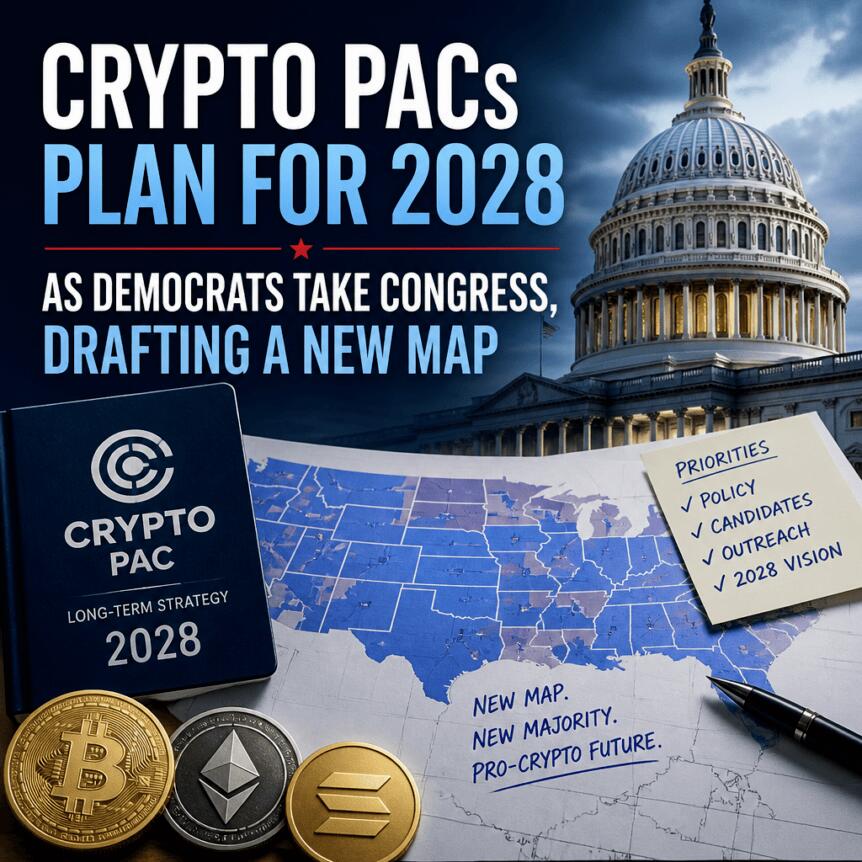
Even with the Ohio loss, the pro-crypto super PAC network is not exiting the political arena. The original reporting says Fairshake has more than $67 million heading into the 2028 elections. Geoff Vetter said newly elected and sitting members will face a choice: “protect consumers and American jobs or fight progress,” adding that the group plans to watch lawmakers closely and that “’28 is a new map.”
That framing implies a strategic shift from single-cycle pressure to longer-term targeting—especially now that the legislative environment in Washington is expected to be more skeptical and institutionally led by figures like Warren. Investors and market participants will likely want to track whether pro-crypto groups respond by focusing more on education and coalition-building, or whether they continue to rely on direct electoral influence to shape committee dynamics and regulatory outcomes.
Over the coming months, the most important question is how quickly crypto-friendly policy advocates can translate committee-level access into legislative momentum—particularly as Democrats consolidate control, and as PAC spending patterns evolve toward 2028.
https://www.cryptobreaking.com/crypto-pacs-plan-for-2028/?utm_source=blogger%20&utm_medium=social_auto&utm_campaign=Crypto%20PACs%20Plan%20for%202028%20as%20Democrats%20Take%20Congress,%20Drafting%20a%20New%20Map%20
Comments
Post a Comment