
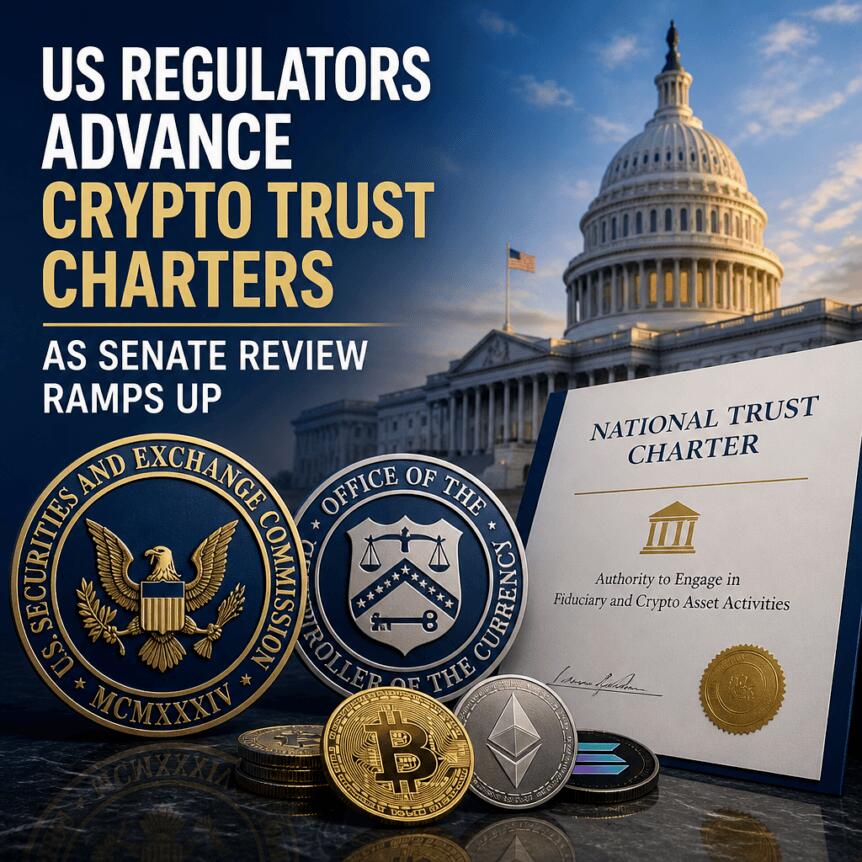
U.S. financial regulators are moving further into the business of licensing crypto firms under federal frameworks, even as congressional oversight is tightening around the paperwork behind those approvals. The latest flashpoint is Coinbase’s trust charter—approved by the Office of the Comptroller of the Currency (OCC)—which lawmakers say raises unanswered questions about how regulators expand crypto access and what compliance rationale is documented.
At the same time, separate congressional inquiries are pressing large crypto companies and Trump-linked entities for records. The convergence of regulatory approvals and expanding requests for internal communications underscores a key theme for the industry: while formal pathways to operate under U.S. oversight are broadening, the justification for those pathways is becoming a central political and legal battleground.
Key takeaways
- Coinbase said its national trust company received final approval from the OCC on Nov. 9, after preliminary conditional approval in April.
- Sen. Elizabeth Warren previously challenged multiple crypto trust-charter approvals in a May 18 letter to the OCC, seeking applications, legal analyses, and related communications.
- Separate from the Coinbase issue, Sen. Richard Blumenthal renewed record demands involving Binance, Tether, and two Trump-linked ventures.
- Congress is focusing not just on outcomes (charters granted) but on the underlying documentation and any potential communications between regulators and the White House or Trump-associated parties.
Coinbase’s trust charter moves from conditional to final
On Nov. 9, Coinbase announced that its national trust company received final approval to open. The company previously received preliminary conditional approval from the OCC in April.
In its announcement, Coinbase framed the development as creating a “consistent federal framework” for its custody activities—an important distinction for a sector where regulatory clarity can materially affect how institutions handle client assets, partnerships, and compliance processes.
For market participants, a final charter matters because it signals that regulators have moved beyond initial conditions and accepted the licensing path as operationally viable. Still, the political scrutiny around the approval process suggests that industry stakeholders may soon see more public debate—regardless of whether the charter is ultimately viewed as an enforcement success or a governance concern.
Warren challenges the OCC’s use of authority
Coinbase’s announcement comes amid ongoing pressure from lawmakers who argue federal regulators have broadened crypto firms’ reach using existing authority. Sen. Elizabeth Warren, in a May 18 letter to the OCC, challenged at least nine trust-charter approvals involving crypto-related entities, including Coinbase’s earlier conditional approval.
Warren’s request centers on documentation and communications. She asked for the applications submitted to the OCC, the legal analyses used to justify approval decisions, and any related communications between OCC officials and the White House or people connected to the Trump family.
That line of inquiry is notable because it does not merely question whether approvals were granted—it targets the institutional rationale behind those decisions. For crypto companies considering similar pathways, the practical takeaway is that regulatory engagement may now need to withstand both standard compliance review and heightened demands for transparency around how determinations are made.
Blumenthal renews record demands for major crypto and Trump-linked firms
Just days before Coinbase’s Nov. 9 announcement, Sen. Richard Blumenthal renewed demands for records from Binance, Tether, and two Trump-linked ventures. The timeline he set for voluntary production extends to Jan. 4, 2027.
Blumenthal also warned that his subcommittee could take additional steps to obtain the requested information if the companies do not comply voluntarily. While the specifics of what records are sought were not detailed in the material provided here, the scope of the named entities suggests the inquiry spans both major exchange and stablecoin infrastructure, as well as politically connected corporate efforts.
This matters for the industry because record requests of this breadth can affect compliance planning and legal strategy—even for companies that believe they are operating within existing regulatory expectations. Firms may also anticipate longer review cycles for internal policies, vendor relationships, and governance processes if oversight expands beyond licensing decisions into broader corporate conduct questions.
Why both tracks—charters and oversight—are moving at once
The current moment reflects a tension familiar to U.S. crypto policy: regulators are constructing more formal ways for certain businesses to operate under federal oversight, while Congress is simultaneously scrutinizing those same decisions for procedural fairness, accountability, and potential conflicts.
Coinbase’s charter story illustrates the regulatory pathway: a preliminary conditional step in April followed by final approval announced Nov. 9. Yet Warren’s May 18 letter suggests at least some lawmakers are not satisfied with the pace or breadth of approvals, and are asking regulators to produce the underlying legal work and communications trail.
Meanwhile, Blumenthal’s renewed demand letter signals that oversight is not limited to licensing approvals. It also extends to record collection from major crypto platforms and stablecoin-related entities, and it includes entities described as linked to the Trump administration. That combination suggests Congress may be attempting to connect policy decisions to broader relationships and decision-making processes.
For investors and operators, the implication is straightforward: regulatory progress may reduce uncertainty in the long run, but it is unlikely to eliminate short-term risk related to investigations, document production, and political scrutiny. Companies pursuing U.S. licensing pathways may want to assume that their applications, compliance narratives, and internal governance records could become part of future public or congressional review—even after approvals are granted.
Readers should watch whether lawmakers’ requests lead to expanded public disclosures, formal subpoenas, or regulatory procedural changes at the OCC. The key uncertainty is not just whether crypto entities receive charters, but whether the documentation and communications behind those decisions will satisfy congressional expectations—and how that outcome could shape the next wave of trust approvals.
https://www.cryptobreaking.com/us-regulators-advance-crypto-trust-2/?utm_source=blogger%20&utm_medium=social_auto&utm_campaign=US%20Regulators%20Advance%20Crypto%20Trust%20Charters%20as%20Senate%20Review%20Ramps%20Up%20
Comments
Post a Comment