
Key Takeaways
- The Trust Wallet hack in December 2025 underscores how vulnerabilities in crypto tools can impact small and medium enterprises (SMEs), even when attacks target individual users.
- Supply-chain vulnerabilities, such as compromised browser extensions or stolen API keys, can circumvent traditional security defenses and cause rapid financial losses.
- Weak user verification processes can strain reimbursement efforts, leading to delays and operational challenges during incident response.
- Heavy reliance on hot wallets remains a significant risk for SMEs, due to exposure to malware, malicious updates, and private key theft.
The December 2025 breach of Trust Wallet, resulting in approximately $7 million in losses, offers critical insights for crypto-friendly SMEs. Although primarily servicing individual users, the attack’s mechanics reveal common vulnerabilities that extend to fintech firms and decentralized autonomous organizations (DAOs). The incident highlights the importance of robust security protocols and proactive measures to safeguard assets in an increasingly interconnected crypto environment.
During the attack, malicious actors targeted the wallet's Chrome browser extension by deploying a corrupt update affecting users on version 2.68. This malicious update, allegedly facilitated through a stolen Chrome Web Store API key, enabled attackers to inject malicious JavaScript. This script then stole user recovery phrases and private keys during routine wallet activity. The breach led to the swift withdrawal of stolen funds, which were routed across multiple exchanges and cross-chain bridges, complicating asset recovery efforts.
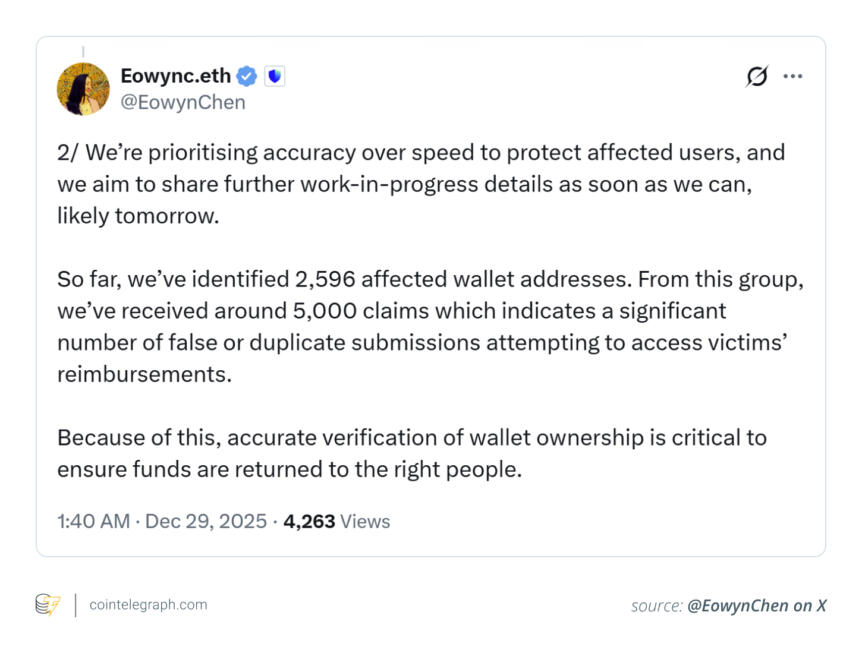
Following the breach, Trust Wallet disabled the compromised extension version, launched a refund portal, and emphasized rigorous user verification to prevent fraudulent claims. Experts have pointed out that the attack emphasizes how trusted software update mechanisms can fail, particularly when malicious code is distributed through official channels, rather than phishing alone.
The incident briefly shook confidence in browser-based wallets, highlighting their vulnerability as hot wallets. Many users remain unaware that such wallets are exposed to malware and supply-chain risks despite their convenience. This event renewed debates around self-custody, with hardware wallets and offline storage emerging as lower-risk alternatives for significant holdings.
It also exposed the operational vulnerabilities faced by SMEs during cryptosecurity incidents. The volume of claims—approximately 5,000 from about 2,500 affected addresses—highlighted the need for validated verification processes. Companies managing crypto assets must establish clear, pre-defined procedures to minimize delays and avoid operational strain when responding to breaches.
In terms of security measures, SMEs should consider cold storage for large assets, enforce multi-factor authentication on all platforms, maintain incident response plans, and regularly conduct external audits. Education on phishing and impersonation attempts is equally vital to prevent follow-up attacks during periods of crisis.
As regulatory oversight intensifies globally, crypto-related enterprises, including SMEs, must align with evolving compliance standards. Failures in security not only threaten asset safety but can also result in legal and reputational consequences. Proactive security and compliance strategies are essential to safeguarding assets and maintaining stakeholder confidence within the dynamic crypto landscape.
https://www.cryptobreaking.com/trust-wallet-hack-reveals-critical/?utm_source=blogger%20&utm_medium=social_auto&utm_campaign=Trust%20Wallet%20Hack%20Reveals%20Critical%20Security%20Flaws%20in%20Crypto-Savvy%20SMEs%20
Comments
Post a Comment