
Key points:
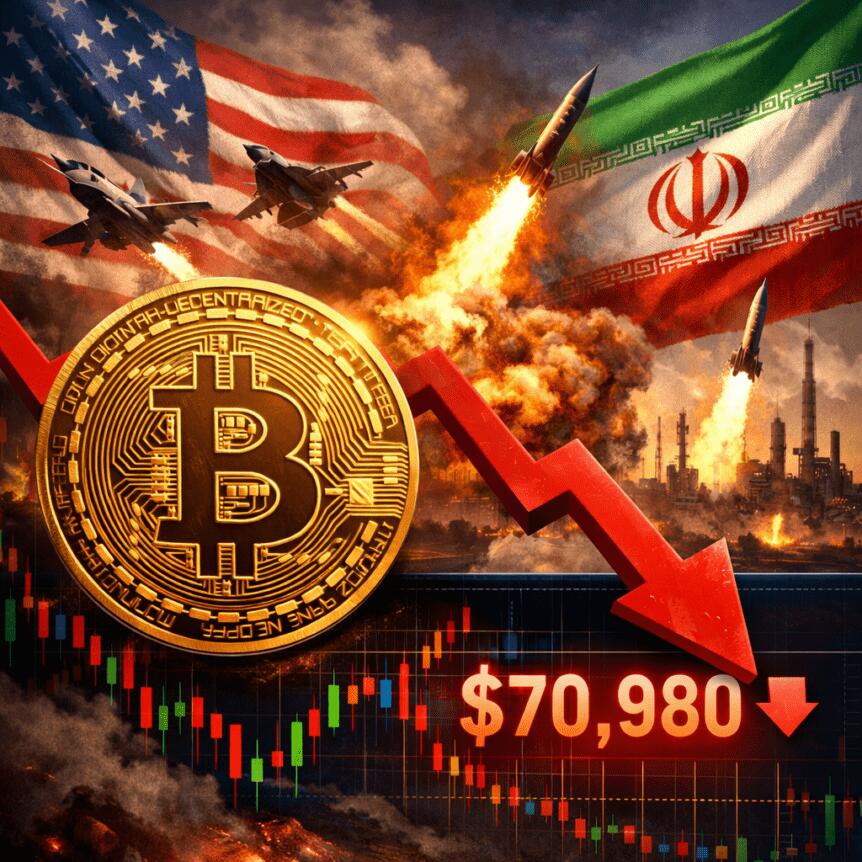
- BTC softens after news that US–Iran negotiations in Islamabad broke down, reviving risk-off pressure.
- US threats to reopen and police the Strait of Hormuz amplified concerns about energy prices and inflation dynamics.
- Bitcoin-long positions faced notable liquidations, signaling renewed volatility in the immediate term.
Diplomatic setback reverberates through crypto markets
In the wake of stalled talks aimed at curbing Iran’s nuclear ambitions, negotiations between the US and Iran were left unfinished as delegations left Islamabad without an agreement. The breakdown coincided with President Donald Trump’s explicit threat to blockade the Strait of Hormuz and to interdict vessels that pay for passage, a move that would directly affect global oil flows and prices. Trump later amplified the stance via Truth Social, reiterating calls for fully operational transit through Hormuz.
The geopolitical headline set the stage for a broader market assessment: if the conflict escalates or oil supply becomes more constrained, inflation pressures could intensify and complicate the policy path for central banks. The Kobeissi Letter, a market commentary that authors follow closely on X, framed the immediate macro risk thus: “If the path forward is continued war, escalation, and a prolonged closure of the Strait of Hormuz, then the Iran War has just entered a new era.” The note further tied inflation dynamics to energy prices, warning that CPI inflation could spike higher if geopolitical tensions persist.
Meanwhile, financial markets prepared for a stream of inflation data and policy commentary. The March CPI print had shown a notable jump in inflationary pressures, though the month’s headline figure landed slightly below consensus expectations; what mattered more for markets was the oil-price component's surprise surge—the strongest in six decades—within the CPI release. Analysts argued that a sustained rise in energy costs could sustain higher inflation readings, complicating the Federal Reserve’s balancing act between taming inflation and supporting growth.
Against this backdrop, market participants questioned whether the escalation would push policymakers toward stimulus or liquidity measures if risk assets continued to wobble. On X, veteran trader Michaël van de Poppe argued that a longer flare-up in the Iran situation would likely hamper risk-on assets, prompting discussions about possible Fed intervention. He suggested that a weak economy could force the central bank to reassert its unconventional toolkit, potentially rekindling the liquidity wagon that has historically buoyed risky assets during periods of stress.
Bitcoin liquidity metrics echo renewed volatility
Bitcoin’s price reaction unfolded as a mixed bag of risk signals and technical pressure. In the lead-up to the opening of futures markets, BTC’s move below $71,000 represented a retreat from recent highs and highlighted a potential trigger for late-long positions to unwind. Market data from CoinGlass indicated heightened volatility, with long liquidations climbing toward the $350 million mark over the preceding 24 hours. The liquidation heat map pointed to a tremor in speculative bets as traders repositioned in response to a shifting macro and geopolitical backdrop.
For traders, the impulse to seek safer harbors clashed with the crypto market’s own risk profile. Crypto traders often respond quickly to macro headlines because crypto markets are still highly sensitive to liquidity conditions and the stance of global financial policy. The latest data underscored that even a single, loud geopolitical cue can cascade into material downside pressure for long positions, especially when paired with concerns about energy prices and inflation expectations.
“Volatility remains high, and there won't be a path forward where risk-on assets perform well if this remains the consensus,” wrote a notable market observer in response to the current environment.
Those who watch the broader macro canvas note an emerging tension: a weaker real economy could prompt a renewed dose of monetary accommodation, which historically has supported risk assets in the short term but could complicate inflation trajectories over the longer horizon. The question traders are tracking is whether the Fed and other major central banks will lean into more expansive policy if geopolitical risk sustains its grip on markets, or if tighter financial conditions will reassert themselves as inflation drivers remain in focus.
Inflation risk, policy expectations, and what comes next
Beyond the immediate price action, the narrative around inflation and policy remains central to crypto's risk-reward calculus. The March CPI data had shown a notable oil-price component spike, underscoring how energy dynamics can tilt inflation readings and, by extension, central-bank guidance. Kobeissi’s analysis linked these dynamics to the Iran scenario, arguing that a protracted conflict could push inflation higher, potentially prompting renewed monetary support or liquidity measures to cushion real-economy weakness.
Looking ahead, investors will be watching the upcoming suite of inflation indicators, including the March Producer Price Index (PPI) release, for signals about the breadth of price pressures. Additionally, speeches from senior Federal Reserve officials will likely frame the near-term policy outlook more clearly. In that context, Bitcoin and other crypto assets could continue to act as a barometer for how traders interpret the risk of policy missteps amid geopolitical stress and energy-price volatility.
What to watch next
The immediate focus remains on how geopolitical tensions evolve and what that means for energy markets, inflation, and central-bank responses. If talks resume or a de-escalation path emerges, crypto traders could reassess risk appetites, potentially stabilizing prices as liquidity conditions normalize. Conversely, further escalation—whether through renewed sanctions, renewed missile rhetoric, or supply-chain disruptions in energy markets—could keep volatility elevated and drive continued attention on liquidity dynamics and macro forecasts.
Investors should also monitor how long the current risk-off mood persists and whether the market receives a clearer signal from policy makers about their tolerance for inflation versus economic growth trade-offs. The next few weeks promise to be data-rich, and the balance of macro signals—oil prices, inflation readings, and central-bank communications—will likely set the tone for Bitcoin and broader crypto markets as they navigate a geopolitically unsettled environment.
This editorial summary reflects observed market reactions and publicly available data points from TradingView, CoinGlass, and market commentary circulating around the geopolitical narrative surrounding US–Iran tensions and Hormuz-related risks. As always, readers should perform their own due diligence and consider multiple scenarios as the macro landscape evolves.
Next up, traders will scrutinize inflation trajectories and policy guidance to assess whether crypto assets gain or lose traction in a macro environment increasingly shaped by energy prices and geopolitical risk.
https://www.cryptobreaking.com/geopolitical-risk-pushes-bitcoin-under/?utm_source=blogger%20&utm_medium=social_auto&utm_campaign=Geopolitical%20risk%20pushes%20Bitcoin%20under%20$71K%20amid%20US-Iran%20tensions%20
Comments
Post a Comment